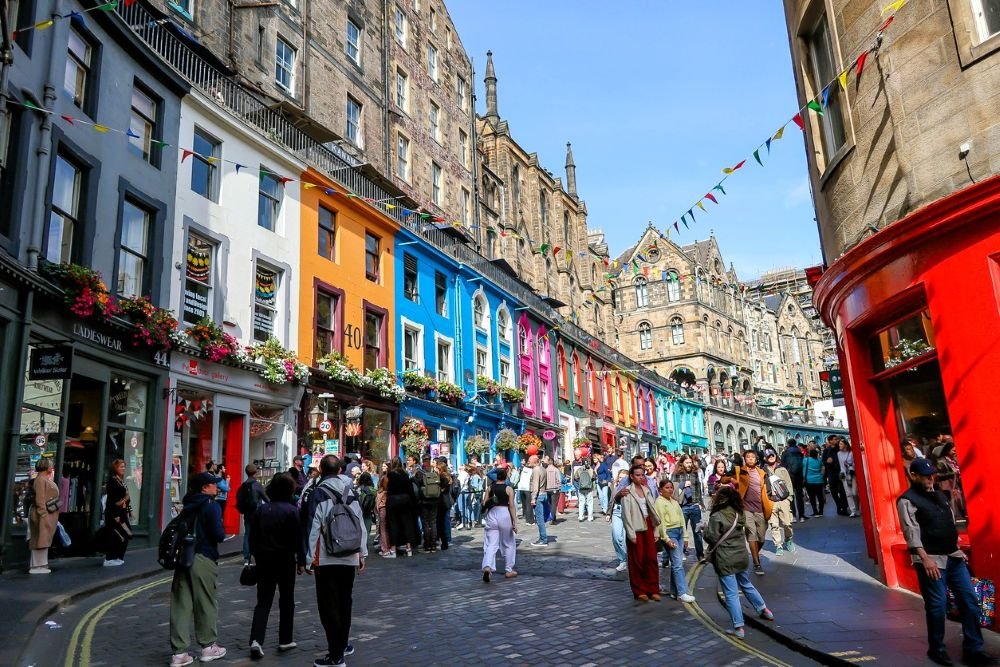
For most of the year, Edinburgh feels like a city built for stories. Stone buildings rise along steep streets. Narrow closes disappear between larger thoroughfares. A medieval Old Town faces the ordered elegance of the Georgian New Town, while a castle watches from its volcanic perch above them both.
Then August arrives, and the stories spill into the streets.
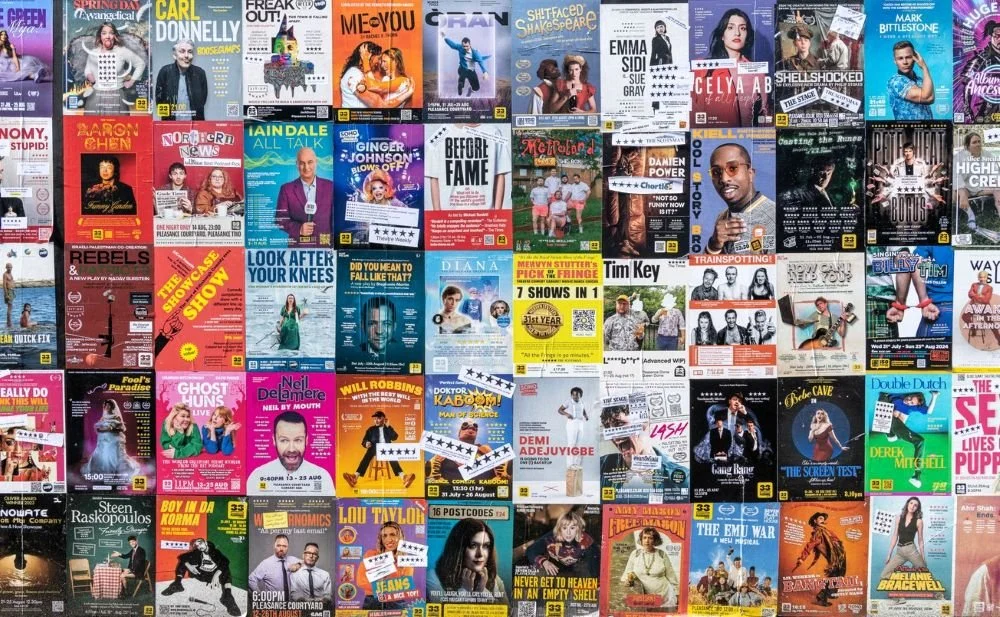
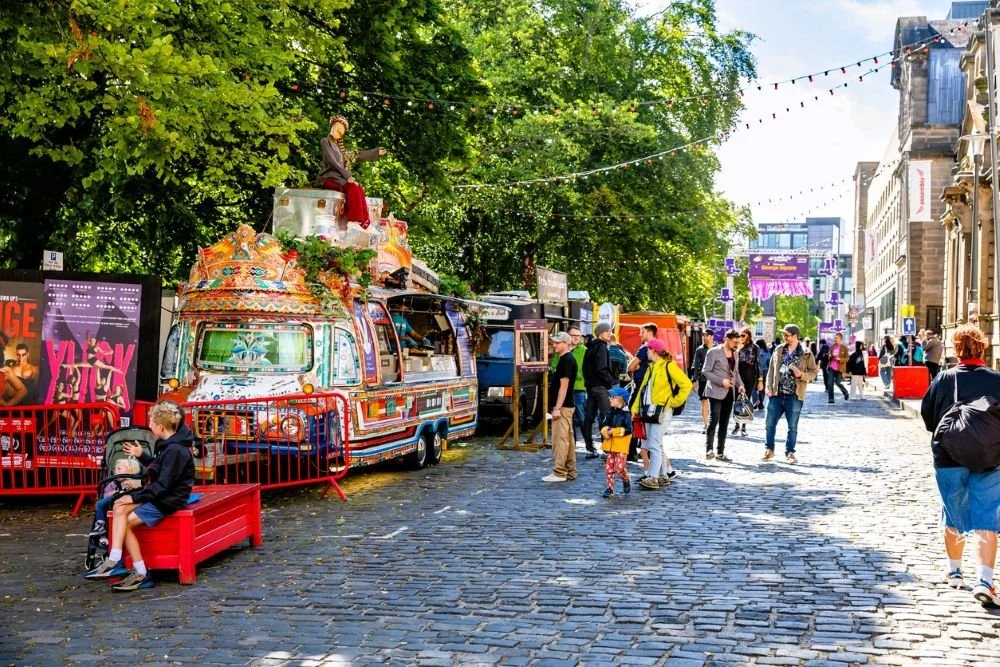
The Edinburgh Festival Fringe transforms the city into one enormous stage. Performers hand out flyers along the Royal Mile. Church halls, university buildings, pubs, basements, hotel conference rooms, and temporary theaters become venues. Comedy, drama, music, dance, cabaret, circus, and performances that resist easy classification unfold from morning until well after dark.
The scale can be exhilarating and slightly overwhelming. Yet the Fringe does not feel as though it has simply been placed on top of Edinburgh. It feels like a particularly vivid expression of the city itself.
We were fortunate to schedule our own trip to Edinburgh while the Fringe was underway. It quickly became the highlight of our visit—not only because of the performances we saw, but because of the energy that seemed to animate every street and public space. The city felt more crowded, unpredictable, and alive, but also more unmistakably itself.
To understand why the Fringe belongs so naturally in Edinburgh, it helps to read the city beyond the festival: its history, its literature, its neighborhoods, and the distinctive characters who have inhabited both its streets and its books.
A City Built on Stories
Edinburgh is a city of striking contrasts.
It is grand and intimate, rational and mysterious, austere and theatrical. Its skyline is defined by monuments, church spires, rocky hills, and dark stone buildings that can appear imposing in one light and romantic in another. Beneath that drama lies a city long associated with education, publishing, philosophy, science, religion, and political argument.
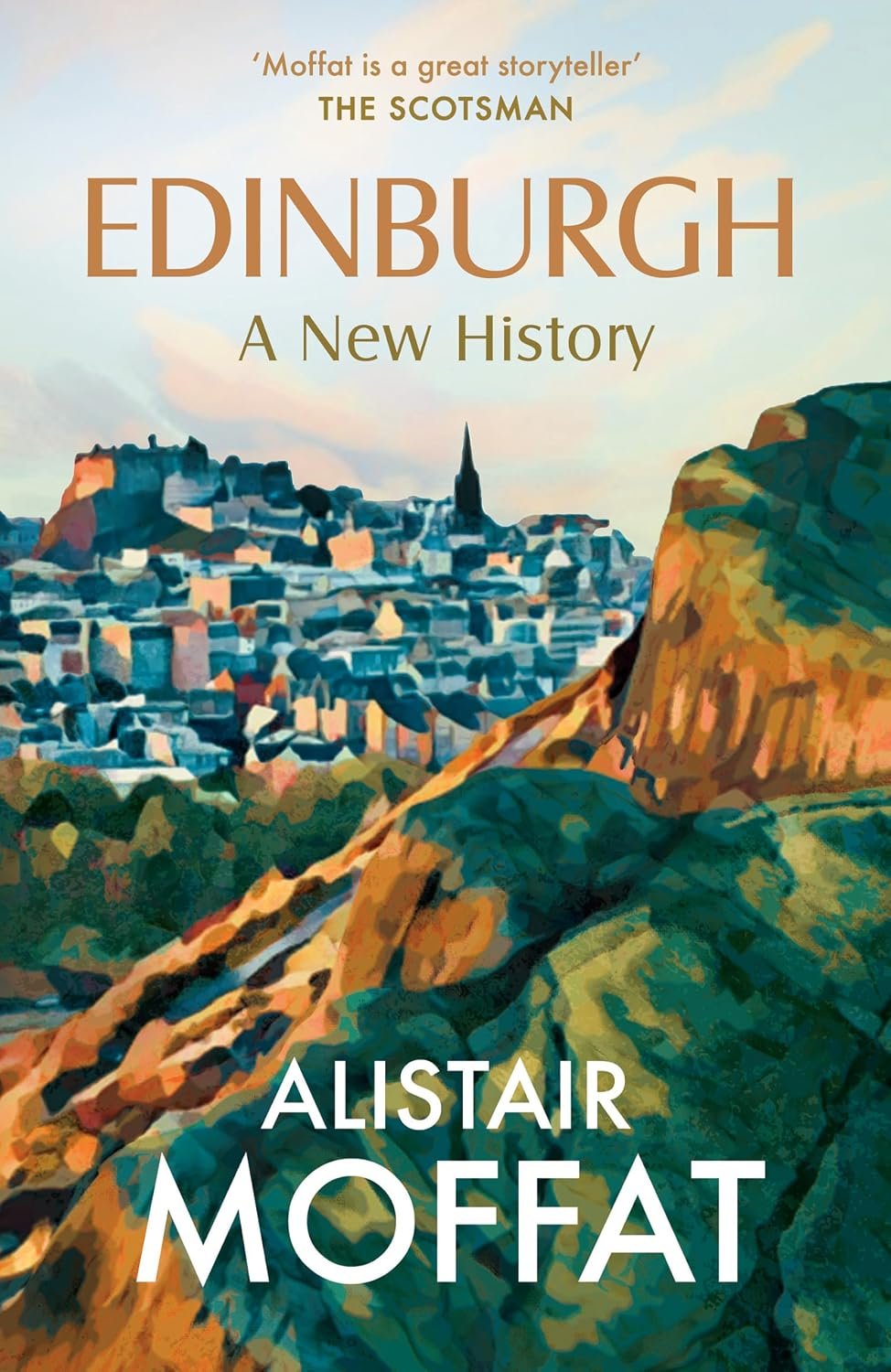
In Edinburgh: A New History, Alistair Moffat traces the forces that shaped the city over centuries, from its early settlement and royal history to its intellectual achievements and modern cultural identity. The book provides a valuable foundation for understanding Edinburgh as more than a beautiful historic setting. It reveals a city repeatedly remade by ambition, conflict, new ideas, and the people who gathered there to exchange them.
Moffat also has a direct connection to the festival world, having served as director of the Edinburgh Festival Fringe earlier in his career. That link makes the book an especially fitting companion to the city in August. The Fringe may appear spontaneous and unruly, but it belongs to a much longer Edinburgh tradition of public debate, creative experimentation, and intellectual risk-taking.
The city has always contained multiple versions of itself. The medieval lanes of the Old Town coexist with the geometric order of the New Town. Formal institutions stand beside crowded pubs. A reputation for seriousness is balanced by a deep appreciation for satire, eccentricity, and performance.
The Fringe does not erase these contradictions. It amplifies them.
Why the Fringe Feels So Perfect Here
Part of the magic of the Fringe comes from the way it uses the city.
In a conventional theater district, audiences move between clearly marked cultural venues. During the Fringe, the boundary between Edinburgh and the performance taking place within it almost disappears. A doorway that looks ordinary in the afternoon may lead to a tiny theater. A courtyard becomes a gathering place. A walk to dinner turns into an encounter with musicians, comedians, costumed performers, and promoters making increasingly inventive attempts to capture the attention of passersby.
The city’s physical character encourages this sense of discovery. Edinburgh rewards wandering even when no festival is taking place. Its layered streets, hidden staircases, enclosed gardens, and sudden views create the feeling that something unexpected may be waiting around the next corner.
During the Fringe, it usually is.
The festival also reflects Edinburgh’s literary personality. This is a city that has produced, inspired, or welcomed writers whose work ranges from the philosophical to the fantastical. Its streets lend themselves to suspense, humor, social observation, and reinvention. The city can serve equally well as a setting for respectable drawing rooms, private rebellions, criminal investigations, ghost stories, and comic misunderstandings.
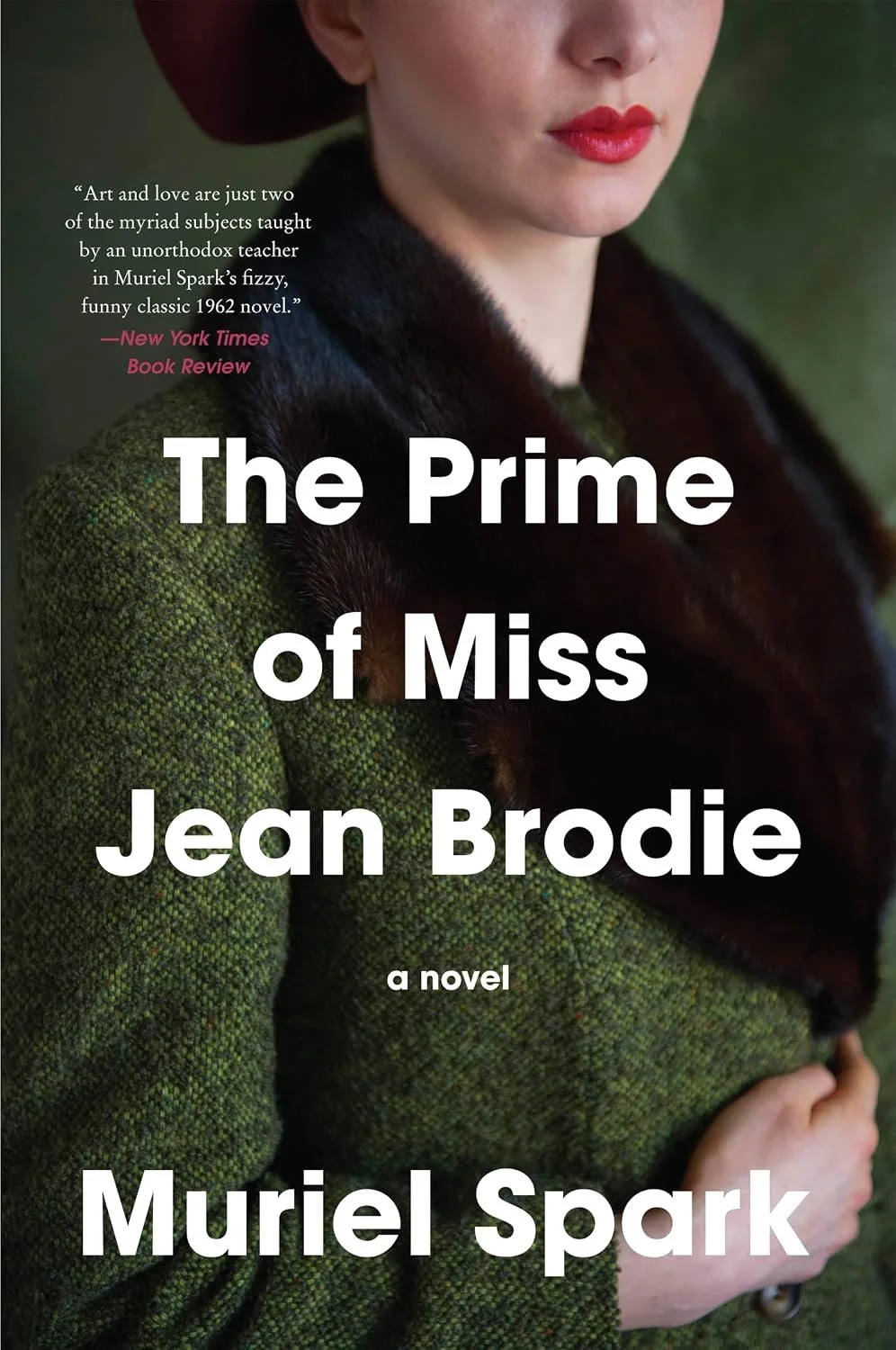
Few novels capture Edinburgh’s ability to make ordinary lives feel theatrical quite like Muriel Spark’s The Prime of Miss Jean Brodie. Set largely in 1930s Edinburgh, the novel follows an unconventional schoolteacher and the group of girls she selects as her special set. Miss Brodie sees herself as an artist shaping young lives, but Spark gradually reveals the vanity, manipulation, and danger beneath her charisma. The book is sharply funny, unsettling, and unmistakably Edinburgh. Its world is governed by schools, social hierarchies, religious divisions, cultural aspirations, and tightly controlled appearances. Spark exposes the performance hidden within respectable life: the roles people choose, the stories they tell about themselves, and the consequences when those stories become more powerful than reality.
That tension between public persona and private truth feels especially resonant during a festival devoted to performance. For a few weeks, Edinburgh fills with people trying on voices, identities, ideas, and versions of themselves. Some will succeed. Others will fail spectacularly. The freedom to attempt both is central to the Fringe.
The Edinburgh Beyond the Landmarks
The Fringe brings extraordinary numbers of visitors into the city, but Edinburgh remains more than its busiest streets and most recognizable monuments. To understand why people become attached to it, it helps to encounter the city at a more human scale.
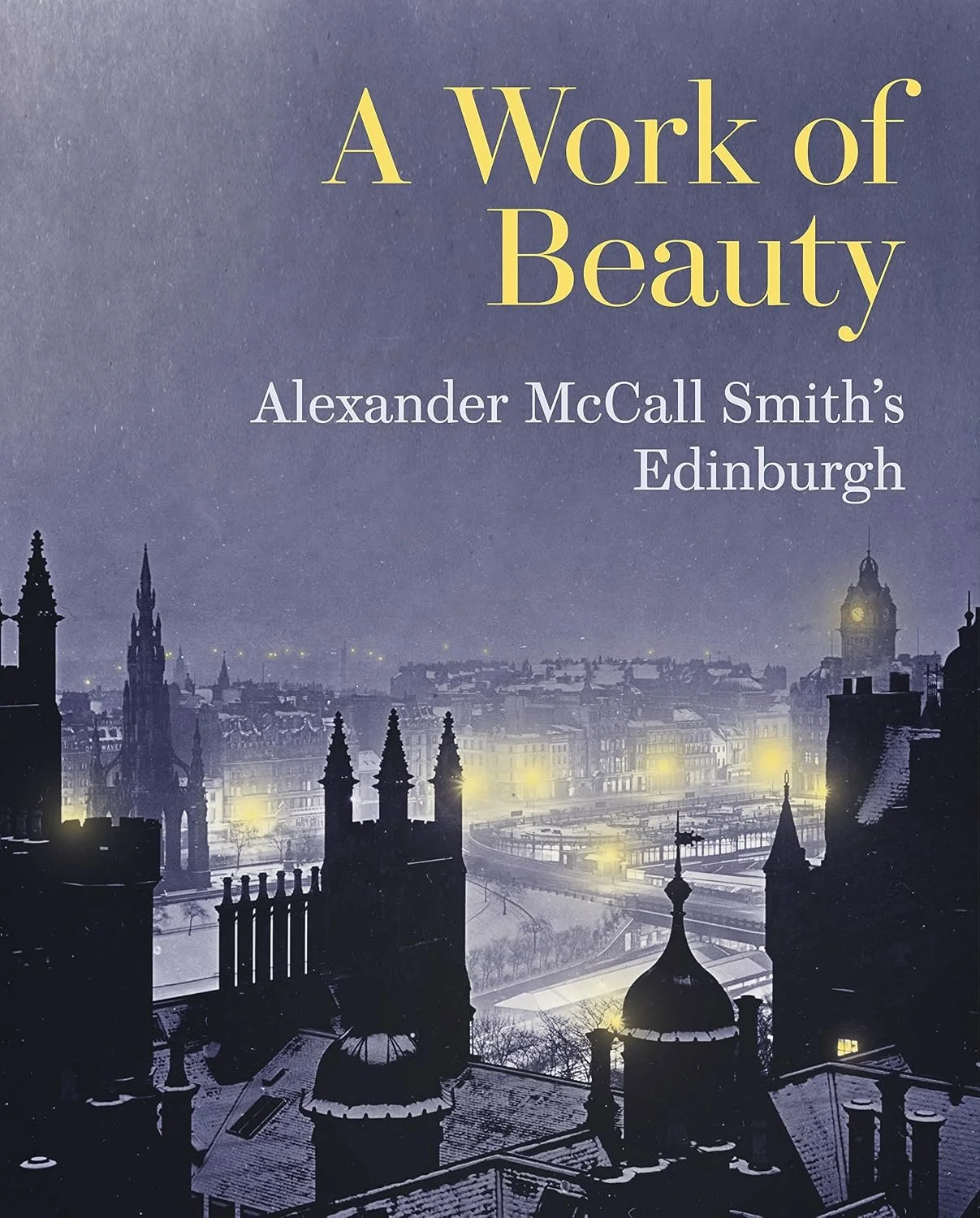
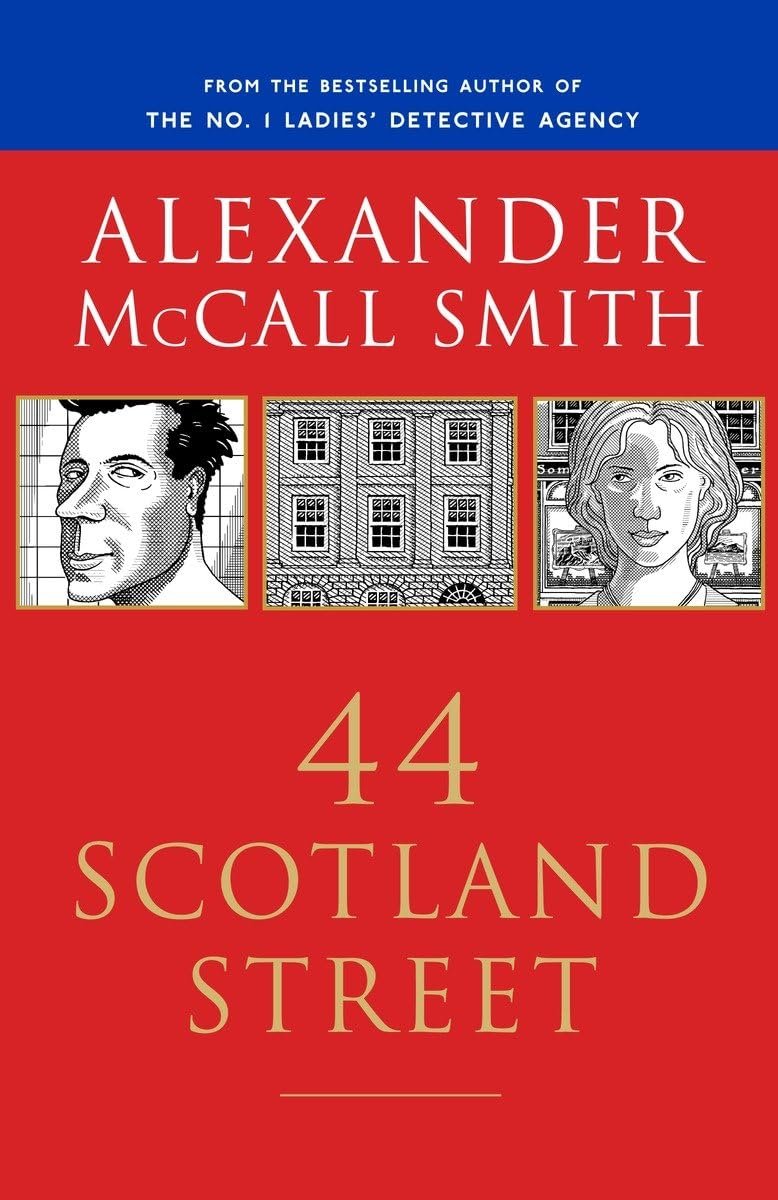
Alexander McCall Smith offers that perspective in both Edinburgh and his novel 44 Scotland Street.
In Edinburgh, McCall Smith presents an affectionate portrait of the city through its history, architecture, cultural life, neighborhoods, institutions, and residents. Rather than treating Edinburgh as a checklist of attractions, he explores the qualities that give the city its particular character. It is an inviting introduction for readers who want to understand how Edinburgh sees itself and why it inspires such loyalty.
That affection also shapes 44 Scotland Street, the first novel in McCall Smith’s long-running series about the residents of a fictional building in Edinburgh’s New Town. Originally published in installments, the book follows a loosely connected group of neighbors whose lives intersect through friendships, misunderstandings, romantic entanglements, and everyday acts of curiosity.
The pleasures of the novel are found less in dramatic plot twists than in observation. McCall Smith notices the small rituals, social codes, insecurities, and absurdities that make urban life interesting. His Edinburgh is populated by philosophers, portrait painters, precocious children, overbearing parents, and people attempting, with mixed success, to understand one another.
The book offers a useful counterpoint to the spectacle of the Fringe. Festivals can make a city feel defined by its largest moments, but 44 Scotland Street reminds us that the character of a place also resides in conversations, routines, neighborhoods, and the people living behind its doors. That may be another reason the Fringe works so well here. For all its international scale, it is built from thousands of small encounters: a performer addressing a room of twenty people, strangers comparing recommendations in a line, an audience taking a chance on a show because someone handed them a flyer in the street.
The festival is enormous, but the experience of it can feel remarkably personal.
A Festival of Possibility
The Edinburgh Festival Fringe began with an act of creative defiance: performers arriving without invitations and staging their work outside the official program. That open spirit remains essential to its identity.
The Fringe is not only a showcase for polished productions or established performers. It is a place to experiment, to take risks, to be discovered, to disappear into the schedule, or simply to find out whether an idea works in front of an audience. That sense of possibility suits Edinburgh.
The city has enough history to give the festival weight, but enough imagination to prevent that history from becoming restrictive. Its institutions provide cultural authority; its streets invite irreverence. The setting is dramatic, but never too polished. There are shadows, uneven surfaces, unexpected entrances, and constant reminders that the city has accumulated its identity rather than carefully manufactured it.
Even the weather can become part of the experience. Crowds move through rain and sudden sunlight, climbing hills and ducking into venues. Plans change. Recommendations pass quickly between strangers. A show chosen almost at random can become the one remembered most clearly. The Fringe turns uncertainty into part of the pleasure.
Reading Edinburgh
The Fringe may be Edinburgh at its most exuberant, but these books reveal the deeper character of the city beneath the festival: its history, wit, contradictions, neighborhoods, and enduring instinct for storytelling. Together, they help explain why Edinburgh feels not only like the setting for the Fringe, but its natural home.
Explore the featured books below. Travelreads is proud to partner with Bookshop.org, where purchases help support independent bookstores.
Continue exploring the stories, landscapes, and literary traditions of England, Scotland, Wales & Northern Ireland on our United Kingdom bookshelf.