The Best Travel Novels
Travel novels are works of fiction in which a journey or a vivid sense of place drives the story. At its finest, travel fiction makes a place unforgettable: you can almost feel the heat of Bombay in Shantaram, the silence of the Sahara in The Alchemist, and the uneasy promise of paradise in The Beach.
The travel novels gathered here take many forms. Some are historical fiction that brings a place's past to life. Others tell of life-changing trips, whether carefully planned or completely unexpected, or offer lighthearted tales perfect for a train ride or long flight. They spark inspiration for future travels, offer perspectives no guidebook can match, and make wonderful companions during the quiet stretches along the way.
For many travelers, reading is as much a part of the adventure as the destination itself, a chance to unwind, escape the screen, and slip into another world. It's no wonder that a love of travel so often goes hand in hand with a love of books. Explore our recommendations below, from epic voyages and sweeping tales of the past to stories where place becomes a character.

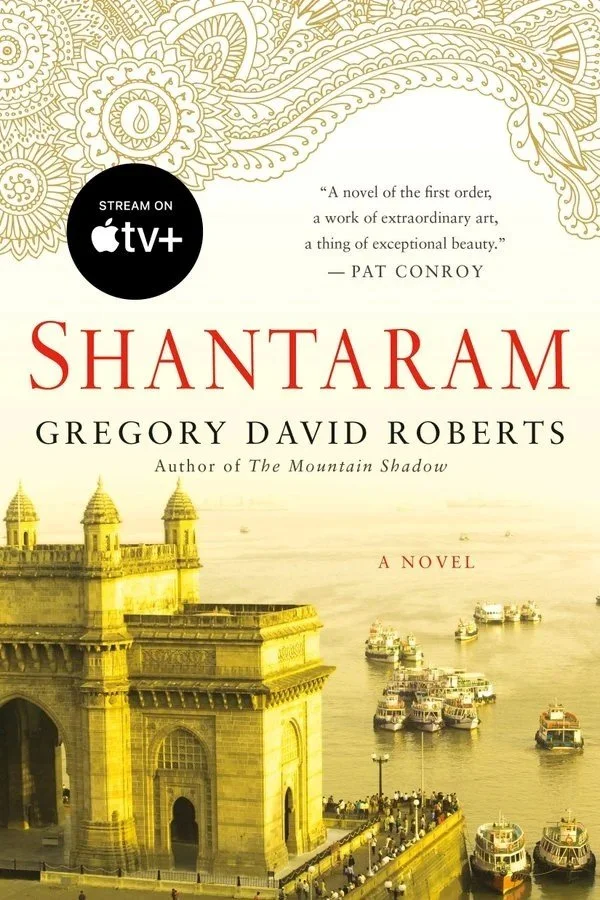
Travelreads Pick: Shantaram, by Gregory David Roberts
This iconic 2003 epic opens with a man who has run out of places to hide. Lin, an escaped Australian prisoner, vanishes into the teeming streets of 1980s Bombay (now Mumbai), hoping to become someone new. What he finds is a city of staggering contradictions, where he opens a free clinic in a slum, falls under the spell of a mysterious woman, and is drawn into a world of smugglers, crime lords, and Bollywood film sets. Sprawling, philosophical, and utterly immersive, it is one of the great novels of place, and the kind of book that stays with you long after the last page.
The Best Novels Built Around a Journey
The Alchemist, by Paulo Coelho
This international bestseller has touched the hearts of millions with its timeless story of adventure, self-discovery, and the pursuit of a personal legend. Paulo Coelho follows Santiago, a young Andalusian shepherd who leaves behind the life he knows after dreaming of a hidden treasure near the Egyptian pyramids. His journey carries him from the lively streets of Tangier to a desert oasis and across the vast Sahara, where he encounters thieves, merchants, a mysterious Englishman, and the wise alchemist who helps him understand the meaning of the signs around him. Along the way, Santiago learns to trust his instincts, recognize opportunity, and listen to what Coelho calls the language of the world. Simple, philosophical, and deeply hopeful, The Alchemist is a modern fable about embracing uncertainty, following the heart, and finding the courage to pursue what matters most. Read our full book review here.
Life of Pi, by Yann Martel
Yann Martel’s Life of Pi is a brilliantly imaginative novel about Pi Patel, a curious and deeply spiritual 16-year-old boy who survives a shipwreck and finds himself adrift in the Pacific Ocean. His only companion is Richard Parker, a 450-pound Bengal tiger who has escaped from Pi’s family zoo along with several other animals. As the days at sea become weeks and then months, Pi must use his intelligence, faith, and knowledge of animal behavior to remain alive while sharing a small lifeboat with a powerful predator. Raised in India and fascinated by religion, Pi embraces Hinduism, Christianity, and Islam, and his unusual spiritual outlook becomes central to the way he understands his ordeal. Symbolically rich, suspenseful, and often surprisingly funny, Life of Pi is a remarkable story about survival, belief, storytelling, and the elusive nature of truth, culminating in an unforgettable conclusion that invites readers to reconsider everything that came before. Read our full book review of Life of Pi.
The Beach, by Alex Garland
Alex Garland’s The Beach is a gripping and unsettling novel about the seductive promise of escape and the danger of pursuing paradise at any cost. The story follows Richard, a young English backpacker traveling through Thailand, who is given a mysterious hand-drawn map to a supposedly untouched island hidden from tourists. After reaching the beach with a French couple, he discovers a secluded community of travelers who have built their own private world among white sand, clear water, and fields of marijuana guarded by armed farmers. At first, life on the island seems idyllic, filled with swimming, fishing, shared meals, and freedom from the routines of ordinary society. But isolation, secrecy, jealousy, and fear gradually begin to fracture the community, while Richard’s own fascination with violence and adventure becomes increasingly disturbing. Fast-paced, atmospheric, and psychologically sharp, The Beach explores the darker side of backpacker culture and asks whether paradise can survive once people begin trying to possess it. Read our full book review of The Beach here.
What Is the What, by Dave Eggers
Dave Eggers’s What Is the What is a powerful and deeply affecting novel based on the life of Valentino Achak Deng, one of the thousands of displaced children known as Sudan’s Lost Boys. The story moves between Valentino’s difficult life as a refugee in the United States and his memories of fleeing his village during the Second Sudanese Civil War. Separated from his family, he journeys across Sudan on foot, enduring hunger, violence, disease, and the constant threat of attack before eventually reaching refugee camps in Ethiopia and Kenya. Years later, his arrival in America brings safety but not an easy sense of belonging, as he confronts loneliness, misunderstanding, and the challenge of rebuilding a life far from home. Blending biography and fiction, Eggers creates an intimate portrait of resilience, displacement, memory, and survival. What Is the What is both a gripping human story and a moving testament to those forced to carry the weight of the past while trying to create a future in an unfamiliar world. Read our full book review of What Is the What.
The Grapes of Wrath, by John Steinbeck
John Steinbeck’s Pulitzer Prize-winning masterpiece The Grapes of Wrath follows the Joad family as they are driven from their Oklahoma farm during the Dust Bowl and join thousands of other families heading west in search of work and survival. Traveling along Route 66 in a battered truck, they endure hunger, illness, loss, and repeated disappointment while clinging to the promise of California’s fertile valleys. What they find instead is exploitation, hostility, and a labor system designed to keep migrant workers desperate and powerless. Through the Joads’ journey, Steinbeck creates both an intimate family drama and a sweeping portrait of a nation in crisis, contrasting cruelty and greed with moments of extraordinary generosity and solidarity. Published in 1939, The Grapes of Wrath remains a fiercely compassionate novel about injustice, endurance, and the strength people discover when survival depends on standing together. Read our review of The Grapes of Wrath.
Historical Fiction That Brings the Past to Life
The Nightingale, by Kristin Hannah
The Nightingale by Kristin Hannah is a powerful and deeply moving novel about two sisters whose lives take very different paths during the German occupation of France in World War II. Vianne remains in her small village, struggling to protect her daughter while a German officer is billeted in her home and the dangers of occupation grow more severe. Her younger sister, Isabelle, is impulsive, fearless, and determined to resist, eventually risking her life to help downed Allied airmen escape across the Pyrenees. Inspired in part by the remarkable courage of women who served in the French Resistance, the novel reveals the many forms bravery can take, from dramatic acts of defiance to the quiet sacrifices required for survival. Heart-wrenching, suspenseful, and ultimately inspiring, The Nightingale is an unforgettable story of love, resilience, and the extraordinary courage of ordinary people. Click here for our review of The Nightingale.
The Pillars of the Earth, by Ken Follett
Ken Follett’s The Pillars of the Earth is a sweeping historical epic set in 12th-century England, where the dream of building a magnificent cathedral becomes entangled with war, ambition, faith, and forbidden love. At the center of the story is Tom Builder, a gifted mason determined to create something that will outlast him, along with the monks, nobles, craftsmen, and families whose lives become bound to the town of Kingsbridge. As rival factions fight for wealth and power during a period of political turmoil, Follett brings the medieval world vividly to life through its bustling markets, brutal conflicts, soaring architecture, and deeply human struggles. Rich in suspense and unforgettable characters, The Pillars of the Earth is both a gripping adventure and a powerful story about perseverance, creativity, and the extraordinary achievements that can emerge from generations of sacrifice. Read our book review of The Pillars of the Earth.
Memoirs of a Geisha, by Arthur Golden
Arthur Golden's Memoirs of a Geisha, first published in 1997, transports readers into the elegant, competitive, and often secretive world of Kyoto's geisha districts. The story follows Chiyo Sakamoto, a young girl from a poor fishing village who is sold to a geisha house and eventually transformed into the celebrated Sayuri. Under the guidance of the accomplished Mameha, she learns the demanding arts of music, dance, conversation, and ceremony while navigating rivalries, romantic longing, and the strict traditions that govern her life. As Japan moves from the refined world of prewar Gion into the upheaval and deprivation of World War II, Sayuri must repeatedly adapt in order to survive. Richly atmospheric and full of vivid historical detail, it is a story of romance, ambition, and resilience, and of the sacrifices required to shape one's own destiny. Read our review of Memoirs of a Geisha. And if Kyoto has captured your imagination, see our recommendations on the Japan bookshelf.
Pompeii, by Robert Harris
Pompeii by Robert Harris is a fascinating fictional account of the few days before the tragic volcanic eruption of Mount Vesuvius that killed thousands in 79 AD. The novel draws on meticulous historical research to bring the doomed city vividly to life, from its bustling streets to its grand public baths. The story revolves around the engineer Attilus who first senses a crisis with the enormous aqueduct that supports the area, amidst the mysterious rumblings coming from the mountain. As he races to diagnose the source of the disruption, he uncovers a web of corruption and danger that goes far deeper than any engineering failure. This is simply a remarkable story set in one of the world's most influential civilizations, the Roman Empire. Harris masterfully uses the ticking clock of impending catastrophe to create a thriller that feels both intimate and epic in equal measure. Read our full book review of Pompeii.
Outlander, by Diana Gabaldon
Diana Gabaldon's Outlander, first published in 1991, sweeps readers into the misty Scottish Highlands and across two eras at once. In 1945, former combat nurse Claire Randall is on a second honeymoon with her husband when she walks through one of the ancient standing stones and finds herself in 1743. Stranded in a land of raiding clans and Jacobite tensions, she is drawn to a young Highland warrior named Jamie Fraser and caught between two lives. Gabaldon blends rich historical detail, adventure, and a sweeping love story, with the rugged landscape of Scotland as vivid as any character. The first in a long-running series that became the basis for the Starz television show, it is a favorite among readers who like to lose themselves in another world. Want more stories set in Scotland? Explore our recommendations on our Scotland bookshelf.
London, by Edward Rutherfurd
Edward Rutherfurd's London, published in 1997, tells the story of one great city across two thousand years, from a Celtic settlement beside the Thames to the modern capital. Rather than following a single hero, Rutherfurd traces a number of families whose fortunes rise and fall alongside the city's own, so that ordinary lives are woven through the sweep of history. Along the way, the novel moves through the era of the Globe theatre and the Elizabethan stage, Wat Tyler's rebellion, the plague, the Great Fire, and the building of St. Paul's Cathedral, before reaching its climax during the Blitz. Sprawling, richly researched, and absorbing, it is historical fiction on a grand scale, and a perfect companion for a trip to the city. Rutherfurd uses the same generations-spanning approach in his other novels, including Sarum, Paris, and New York. For more to read to understand this amazing country, browse our recommended books set in England.
The Best Novels Where Place Becomes a Character
Where the Crawdads Sing, by Delia Owens
Delia Owens’s Where the Crawdads Sing unfolds in the marshlands of coastal North Carolina, where tidal creeks, sawgrass, birds, insects, and shifting light become as central to the story as any of its characters. The novel follows Kya Clark, abandoned by her family as a child and left to grow up largely on her own in an isolated shack outside the small town of Barkley Cove. Shunned by many of the townspeople as the “Marsh Girl,” Kya learns to survive by reading the landscape around her, developing an intimate knowledge of shells, feathers, plants, and wildlife that eventually becomes both her refuge and her livelihood. Her solitary life begins to change through relationships with two very different young men, Tate Walker and Chase Andrews, and when Chase is later found dead, Kya becomes the focus of a murder investigation that exposes the prejudices and suspicions surrounding her. Part coming-of-age story, part mystery, and part meditation on loneliness and belonging, the novel is deeply shaped by the natural world. Owens writes the marsh with lush, almost lyrical attention, turning its beauty, danger, and isolation into a powerful portrait of place and making the landscape inseparable from Kya’s story.
Pachinko, by Min Jin Lee
Min Jin Lee’s Pachinko is a sweeping family saga that moves from a small fishing village in Korea to the crowded neighborhoods and pachinko parlors of Japan, tracing four generations of one Korean family through much of the twentieth century. The story begins with Sunja, the daughter of a poor but proud family, whose unexpected pregnancy sets in motion a chain of choices that will shape the lives of her children and grandchildren. After leaving Korea for Osaka, Sunja and her family confront poverty, discrimination, war, and the difficult question of what it means to belong in a country that may never fully accept them. Lee uses the family’s changing fortunes to illuminate the history of Koreans in Japan, while keeping the novel grounded in intimate relationships, sacrifice, ambition, and survival. The places in Pachinko are inseparable from its characters: Korea is remembered as a lost homeland, while Japan becomes a place of both opportunity and exclusion. Rich in historical detail and deeply human in scale, the novel is a powerful story about migration, identity, family, and the complicated meaning of home.
One Hundred Years of Solitude, by Gabriel García Márquez
García Márquez’s One Hundred Years of Solitude transports readers to Macondo, the fictional Colombian town at the heart of the Buendía family’s extraordinary, multigenerational story. Over a century, the town grows from an isolated settlement into a bustling community marked by civil war, a banana company, technological change, passion, tragedy, and strange events that become almost ordinary. Generations of Buendías repeat names, mistakes, loves, and obsessions as Macondo itself seems to remember and forget its past. Blending Colombian history with magical realism, García Márquez makes the town feel as vivid and alive as any real destination. Inspired in part by his childhood in Colombia, the novel is an unforgettable journey into a place that exists somewhere between history, memory, and myth.
A Tree Grows in Brooklyn, by Betty Smith
Betty Smith’s A Tree Grows in Brooklyn follows Francie Nolan, an observant, book-loving girl growing up in early twentieth-century Williamsburg, where her family makes do in a crowded tenement and children earn pennies on Saturday “junk day.” That everyday rhythm—hardship alongside street life, family rituals, and neighborhood celebrations—gives the novel its warmth. The tree of heaven pushing through the pavement becomes a fitting emblem of Francie herself: persistent and reaching toward a wider life. Her Brooklyn is an intimate portrait of one corner of New York City, and a natural starting point for exploring the many neighborhoods and stories that make the city so endlessly readable.
The Shadow of the Wind, by Carlos Ruiz Zafón
Carlos Ruiz Zafón's The Shadow of the Wind, first published in 2001, unfolds in the shadowed streets of post-war Barcelona, where a boy's chance discovery leads him into a labyrinth of secrets. In 1945, ten-year-old Daniel Sempere is taken by his father to the Cemetery of Forgotten Books, a hidden library where he is invited to adopt a single volume and protect it for life. His choice, a novel by the elusive Julián Carax, becomes an obsession when he learns that someone has been systematically destroying every other copy. As Daniel searches for the truth about the author, he is drawn into a story of forbidden love, buried history, and danger in the city's old quarter, with the Spanish Civil War casting a long shadow over it all. Gothic, romantic, and endlessly atmospheric, it is a love letter to books and to Barcelona itself, and a favorite among readers who like a mystery they can lose themselves in. If this one leaves you wanting to continue to explore Spain, see our recommendations on our Spain bookshelf.
Interview with the Vampire, by Anne Rice
In Anne Rice’s Interview with the Vampire, New Orleans is part of the spell. Its old houses, shadowed streets, Catholic imagery, and decaying grandeur give the vampire story its unmistakable atmosphere. Louis begins as a plantation owner outside the city; in his confession, he recounts how Lestat turns him into a vampire and draws him into an immortal life he cannot fully accept. Louis struggles with killing humans, while Lestat embraces his appetites without remorse. Their uneasy bond shifts when they turn Claudia—a child—into a vampire, giving her an adult’s mind in a child’s body. The three form a strange, troubled family in an opulent French Quarter home, with chandeliers, statues, and a hidden courtyard. Gothic and deeply rooted in place, the novel offers a haunting way to encounter New Orleans through fiction.
The Prince of Tides, by Pat Conroy
Pat Conroy's bestselling novel The Prince of Tides, published in 1986, is a sweeping and emotionally powerful exploration of family, trauma, memory, and the enduring influence of place. The story follows Tom Wingo, a former football coach from South Carolina's Lowcountry, who travels to New York after his troubled twin sister, Savannah, attempts suicide. There, he begins recounting their childhood to her psychiatrist, Susan Lowenstein, gradually revealing the beauty, violence, loyalty, and buried secrets that shaped the Wingo family. As Tom confronts memories he has spent years trying to escape, his growing connection with Susan forces him to reconsider both his past and the life he has built. Conroy's lush prose brings the marshes, rivers, and coastal landscapes of South Carolina vividly to life, making the Lowcountry feel as central to the novel as any character. Lyrical, heart-wrenching, and deeply immersive, it is an unforgettable American family saga about survival, forgiveness, and the difficult work of telling the truth. Read our review of The Prince of Tides. And if this area of the country has you under its spell, see our recommendations on books set in the South.
Demon Copperhead, by Barbara Kingsolver
Barbara Kingsolver’s Demon Copperhead is rooted in the mountains and small towns of southern Appalachia, where poverty, family ties, addiction, pride, and resilience shape nearly every part of its young narrator’s life. Born to a teenage mother in a trailer in rural Lee County, Virginia, Demon grows up amid instability and loss, moving through foster homes, schools, football fields, and communities struggling under the weight of the opioid crisis. Told in Demon’s sharp, funny, and often heartbreaking voice, the novel follows his attempts to find belonging and a future in a region too often misunderstood or dismissed by outsiders. Kingsolver draws inspiration from Charles Dickens’s David Copperfield, but transforms the story into something distinctly American, using Demon’s life to explore how poverty, neglect, corporate greed, and addiction can shape generations. At the same time, the novel is a vivid portrait of Appalachia itself—its mountains, language, loyalties, beauty, and fierce sense of identity. Winner of the Pulitzer Prize and the Women’s Prize for Fiction, Demon Copperhead is both an intimate coming-of-age story and a powerful contemporary novel about a place and the people who call it home.
The Sun Also Rises, by Ernest Hemingway
Ernest Hemingway’s The Sun Also Rises plunges readers into the restless world of the 1920s, following a group of war-scarred American and British expatriates from the cafés and nightclubs of Paris to the sunbaked streets of Pamplona. At the center of the novel is Jake Barnes, a journalist wounded in World War I and hopelessly in love with the charismatic Lady Brett Ashley, whose beauty and independence draw nearly everyone around her into conflict. Their circle travels to Spain for the San Fermín festival, where days of drinking, jealousy, friendship, and romantic rivalry unfold against the drama of bullfights and crowded celebrations. Hemingway captures both the excitement of travel and the emptiness beneath the group’s constant motion, revealing a generation searching for meaning after the devastation of war. With its spare prose, emotional restraint, and unforgettable sense of place, The Sun Also Rises became one of the defining novels of the Lost Generation and helped transform modern literature. Read our full book review of The Sun Also Rises.
Cutting for Stone, by Abraham Verghese
Abraham Verghese's Cutting for Stone, published in 2009, opens in Addis Ababa, Ethiopia, where twin brothers Marion and Shiva are born at a mission hospital that locals call "Missing." Their mother, an Indian nun, dies in childbirth, and their father, a British surgeon, vanishes, leaving the boys to be raised by two of the hospital's doctors amid political upheaval and unrest. Narrated by Marion, the story follows the brothers as they grow up, drift apart, and are carried across decades and continents, from the hills of Ethiopia to New York. Verghese, a physician born in Ethiopia himself, brings both the city and the world of medicine vividly to life. Epic, tender, and richly atmospheric, it is a perfect choice for readers who like a story that sweeps them away. To learn more about this area of the world, see our recommendations on books set in Africa.
Journeys Beyond the Familiar
Project Hail Mary, by Andy Weir
Andy Weir's Project Hail Mary begins with a mystery: Ryland Grace wakes alone aboard a spaceship with no memory of who he is or how he got there. As fragments of his past return, he discovers that he is humanity's last hope against a threat that is dimming the sun and putting every living thing on Earth at risk. A former science teacher, Grace faces the unknown armed with curiosity, stubborn ingenuity, and a talent for solving problems one step at a time. Weir blends hard science with humor and suspense, but the novel's real power lies in an unexpected friendship that transforms a story of survival into one about trust, sacrifice, and what we owe to others. Inventive, funny, and deeply moving, it is one of the most beloved adventures of recent years.
The Time Traveler's Wife, by Audrey Niffenegger
Audrey Niffenegger's The Time Traveler's Wife is an inventive and deeply moving love story about Henry DeTamble, a Chicago librarian with a rare genetic condition that causes him to travel unpredictably through time, and Clare Abshire, the woman whose life becomes intertwined with his long before they formally meet. Clare first encounters an older Henry when she is a child, while Henry meets Clare in the present without yet knowing the history they already share. As their relationship unfolds out of sequence, the couple must navigate missed moments, sudden disappearances, dangerous journeys, and the painful knowledge that love cannot control what time may take away. Blending romance, science fiction, humor, and tragedy, The Time Traveler's Wife explores memory, fate, longing, and the challenge of building an ordinary life under extraordinary circumstances. It is a haunting and unforgettable novel about devotion, loss, and the ways love can endure even when time refuses to move in a straight line.
The Hitchhiker's Guide to the Galaxy, by Douglas Adams
Douglas Adams's The Hitchhiker's Guide to the Galaxy, published in 1979 after beginning life as a 1978 BBC radio series, is a delightfully absurd science-fiction adventure that sends readers hurtling across the galaxy. Arthur Dent, a bewildered Englishman, escapes Earth moments before it is demolished to make way for an intergalactic highway. Swept into space by his friend Ford Prefect, secretly a researcher for the eccentric electronic travel guide of the title, he meets the two-headed galactic president Zaphod Beeblebrox, the capable Trillian, and Marvin, a brilliant robot burdened with permanent depression. Their improbable journey leads toward the legendary planet of Magrathea and the answer to the ultimate question of life, the universe, and everything. Blending wordplay, satire, and gleeful nonsense, its irreverent humor and endlessly quotable ideas have made it one of science fiction's most beloved classics.
The Hobbit, by J.R.R. Tolkien
The Hobbit is a richly imagined adventure about Bilbo Baggins, a comfort-loving hobbit whose quiet life is interrupted by the wizard Gandalf and a company of dwarves determined to reclaim their homeland and treasure from the dragon Smaug. Their journey carries Bilbo across dangerous mountains, through dark forests, and into encounters with trolls, goblins, giant spiders, elves, and the mysterious creature Gollum, from whom he acquires a ring with remarkable powers. What begins as a reluctant expedition gradually becomes a story of courage, loyalty, greed, and moral choice, as Bilbo discovers abilities he never knew he possessed. Written with wit, warmth, and a strong sense of myth, The Hobbit offers far more than a children’s fantasy. It is an enduring novel about leaving the familiar behind, finding one’s place in a larger world, and recognizing that wisdom and bravery often come from the most unexpected people.

Which Travel Novel Should You Read Next?
Where should I start? It depends on the mood. For something short and hopeful, try The Alchemist. For a book that stays with you and really makes you think, Life of Pi. If you want a page-turner with a strong sense of place, Where the Crawdads Sing and The Beach are hard to put down. And if you'd like to disappear into one world for weeks, Shantaram and The Pillars of the Earth are the great immersive reads.
Curious to learn more about a specific destination? Traveling soon? Start with our section about how to Read the World.
How do we choose our travel novel recommendations? We select each book for a strong sense of place, a journey at the heart of the story, or the power to inspire travel. Every title is read about, weighed, and considered with care before it earns a place here, and we update the list regularly as new favorites are added.
Curated by Travelreads · Last updated October 2026

Travelreads’ recommendations extend beyond fiction. Explore more of the best travel books in our list of staff picks, including exceptional travel writing, memoirs and adventures that bring the world to life.

Love your local bookstore? Buy through our Travelreads Bookshop.org store and help keep independent bookstores thriving in your community!