The Odyssey: What Greece’s Greatest Journey Reveals About the Country
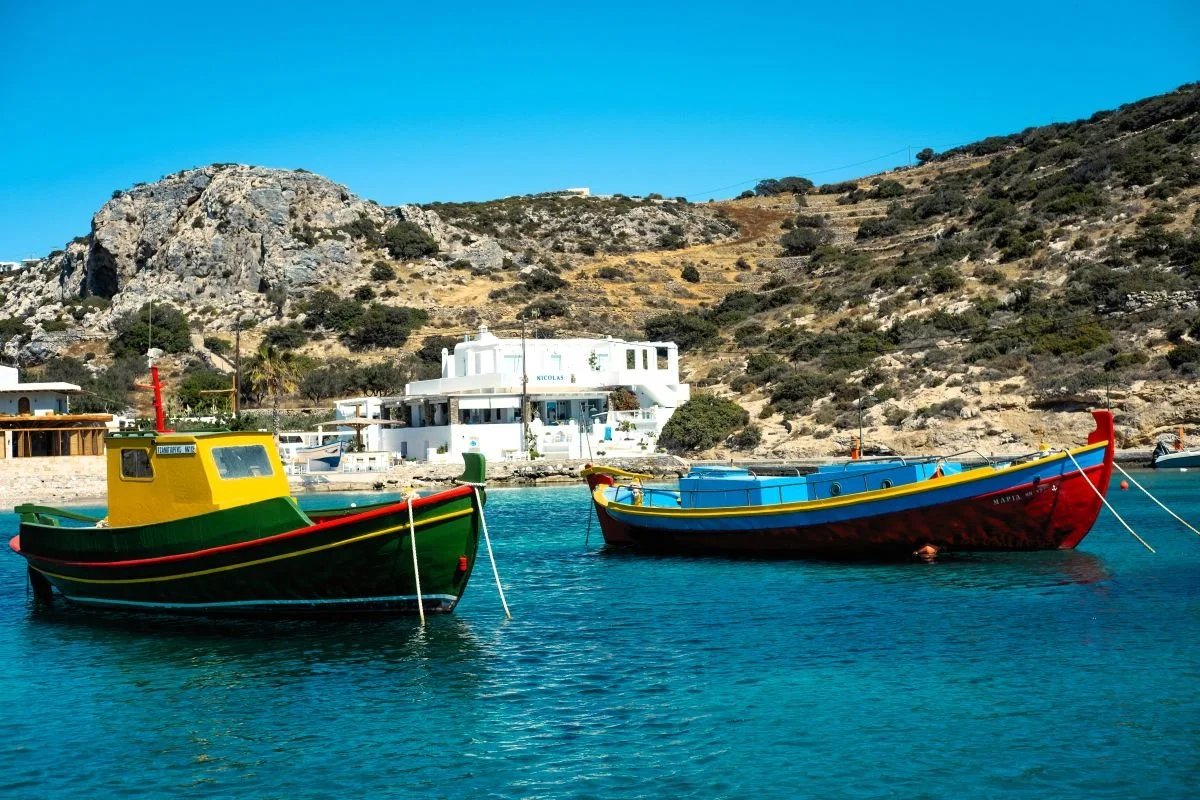
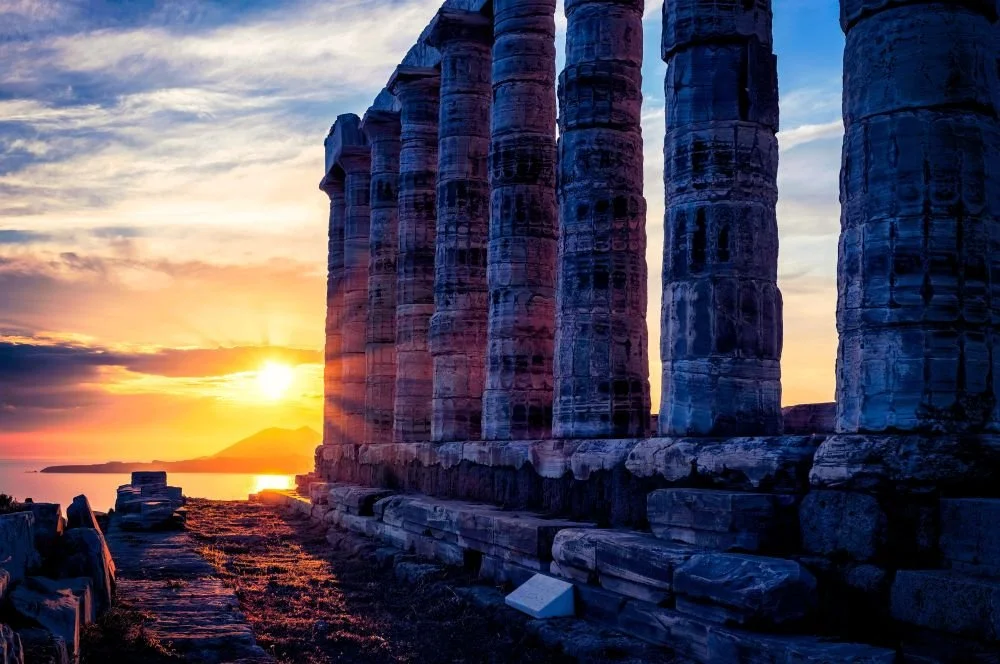
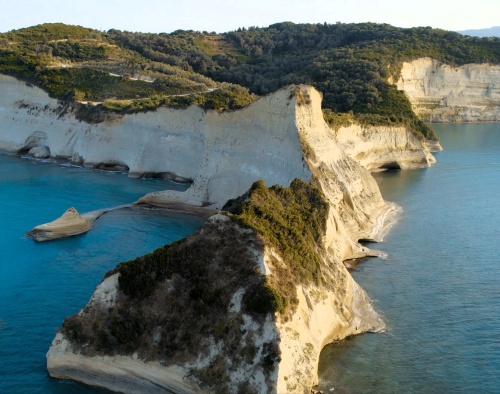
Long before Greece became a popular destination of whitewashed villages, ancient ruins, and islands scattered across brilliant blue water, it was the setting for one of the world’s greatest stories of travel.
The Odyssey is filled with shipwrecks, mysterious islands, dangerous strangers, generous hosts, restless gods, and a long journey across an unpredictable sea. Its world is fantastical, but it is also deeply rooted in the landscape and culture of Greece. Through the story, we begin to see a country shaped by the sea, by the importance of hospitality, and by a past in which history, archaeology, and storytelling remain closely intertwined.
Homer and the Origins of the Story
The Odyssey is traditionally attributed to Homer, the ancient Greek poet also credited with The Iliad. Almost nothing certain is known about Homer himself, and scholars still debate whether the poems were created by one poet or developed through a much longer oral tradition.
The poem was probably composed around the eighth century BCE, drawing upon stories that had been performed, remembered, and reshaped across generations. It follows Odysseus, king of Ithaca, as he attempts to return home after the Trojan War—a voyage that stretches across ten years of storms, strange islands, monsters, enchantments, and divine interference.
The story belongs to a distant and legendary world, but the Greece it evokes is still recognizable: a country connected by water, divided into distinct communities, and filled with places where history and myth are difficult to separate.
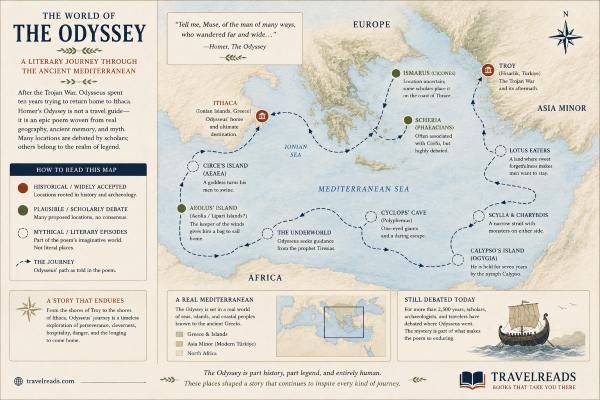
A Culture Shaped by the Sea
It is difficult to understand Greece without understanding the sea.
The country’s mainland is carved by deep bays and long peninsulas, while islands stretch across the Aegean and Ionian Seas. For centuries, the water has connected Greek communities as much as it has separated them. It carried merchants, fishermen, soldiers, migrants, stories, and ideas from one shore to another. That maritime reality lies at the heart of The Odyssey. Nearly every stage of the journey begins or ends at the water. The sea offers passage, but never certainty. It connects one world to another while constantly threatening to push the traveler off course.
The same geography continues to shape Greece today. Ferries are part of ordinary life. Harbors remain gateways and gathering places. Islands separated by relatively short distances have developed their own identities, traditions, food, and architecture. Greece may be celebrated for the beauty of its coastline, but the sea is far more than a view. It has shaped the country’s communities, economy, imagination, and relationship with the wider world.
The Meaning of Hospitality
Again and again in The Odyssey, a traveler arrives in an unfamiliar place and waits to discover what kind of welcome lies on the other side.
The ancient Greek tradition of xenia described the bond of hospitality between a host and a stranger. A traveler was expected to receive food, shelter, protection, and conversation before being pressed to explain who they were or why they had come. In a world of dangerous roads and uncertain sea journeys, hospitality was not a small courtesy. It helped create trust between people who might otherwise have had no reason to trust one another.
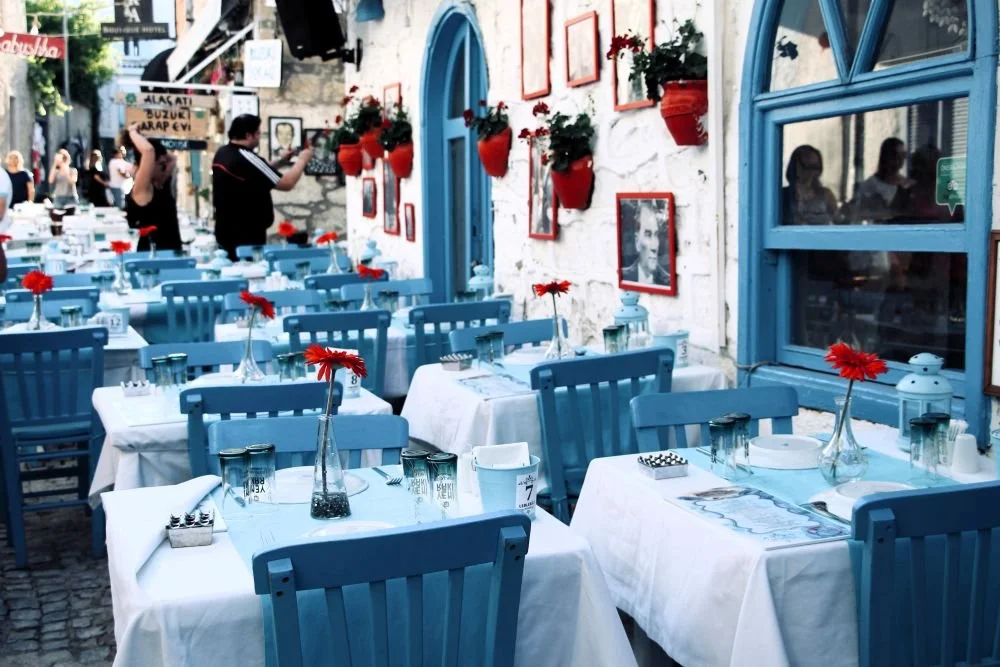
Modern Greece is far removed from Homer’s world, but hospitality still carries a particular warmth and importance. Meals expand to include one more person. Directions turn into conversations. Visitors may be encouraged to sit, eat, drink, or stay longer than they intended.
These moments are not relics of an ancient custom, and Greek hospitality has not remained unchanged across three thousand years. Yet the importance placed on welcoming others has deep roots. The Odyssey helps us recognize that hospitality in Greece has long been more than politeness. It reflects generosity, dignity, and the responsibilities people accept when a stranger arrives at their door.
Where Story and History Meet
One of the most revealing things about ancient Greece is how often history and myth occupy the same ground. Although The Odyssey was composed centuries after the age it describes, its stories preserve echoes of an earlier world of fortified kingdoms, warrior rulers, and seafaring journeys.
Mycenae gives that world a striking physical presence. Visitors enter the citadel through the Lion Gate, beneath two carved lions that once symbolized royal power. Beyond it stand the massive Cyclopean walls, built from stones so large that later Greeks believed only giants could have moved them. Nearby, Grave Circle A contained royal shaft graves filled with gold masks, jewelry, weapons, and other treasures, while the remains of the palace rise above the site. Just outside the citadel, the vast beehive-shaped tomb known as the Treasury of Atreus reveals the engineering and ambition of Mycenaean rulers.
Standing among these massive walls and royal tombs, Homer’s world no longer feels quite so distant. Mycenae gives the legends weight, scale, and an extraordinary sense of place.
A Landscape Filled with Stories
Ithaca, the island traditionally identified as the home of Odysseus, offers a quieter example of the connection between place and story. Its coves, hills, and surrounding waters make it easy to see how a real landscape could become inseparable from a legendary one. The deeper appeal is not proving that a particular event occurred in a particular spot. It is recognizing how naturally the landscape seems to carry the stories attached to it.
This is true far beyond Ithaca. Across Greece, ruins, caves, mountains, islands, and stretches of coastline are associated with gods, heroes, battles, journeys, and transformations. Myth gives these places an additional layer of meaning, while the physical landscape makes the stories feel unexpectedly close.
The boundary between history, geography, and imagination is often impossible to draw—and that is part of what makes traveling through Greece so compelling.
Reading Greece
Traveling through Greece, it is easy to feel how closely landscape, history, and story are connected. The Odyssey may describe an ancient and imaginary journey, but its greatest value for travelers today is not simply the adventure itself. It offers a way to see Greece more deeply: as a country where geography shaped culture, storytelling preserved memory, and the sea, the ruins, and the myths continue to speak to one another.
These four books approach that layered story from different directions—through Homer’s original epic, two imaginative retellings, and a broader history of the Greek people.
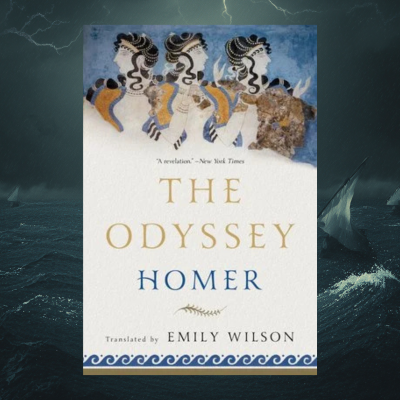
The Odyssey — Homer, translated by Emily Wilson (2017): A fresh, accessible translation of the epic journey that reveals Greece through its seas, islands, customs, and mythology.
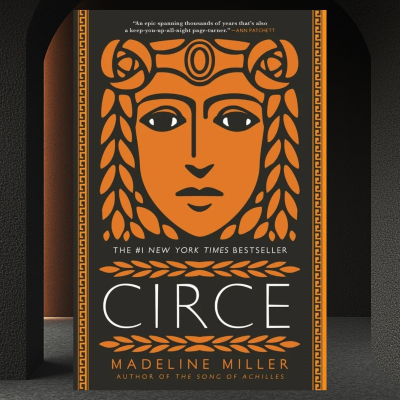
Circe — Madeline Miller (2018): A vivid retelling of the enchantress Circe’s life, bringing the gods, islands, and moral complexity of Greek mythology to life.
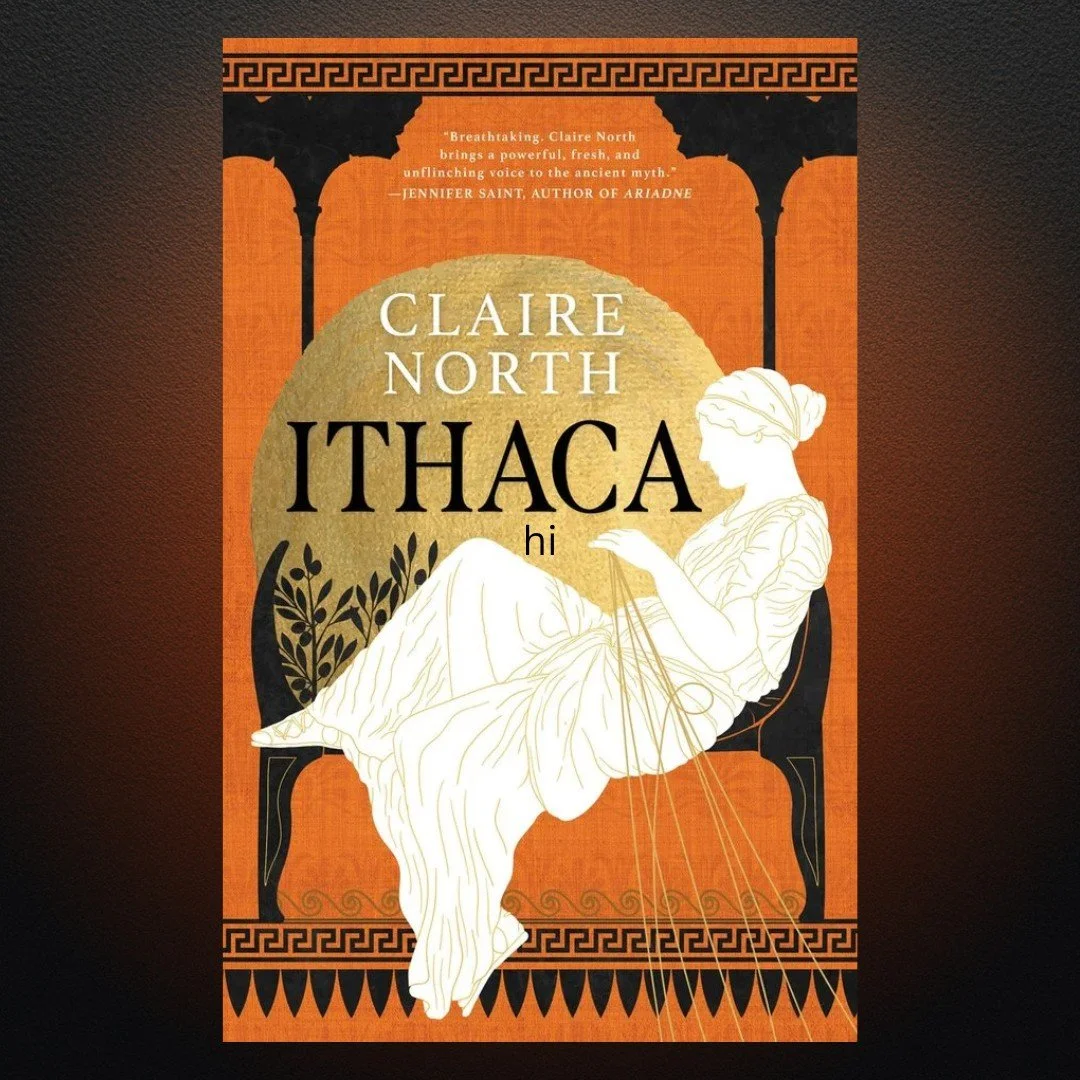
Ithaca — Claire North (2022): A reimagining of Penelope’s story that explores power, survival, and life on Ithaca while Odysseus remains away.
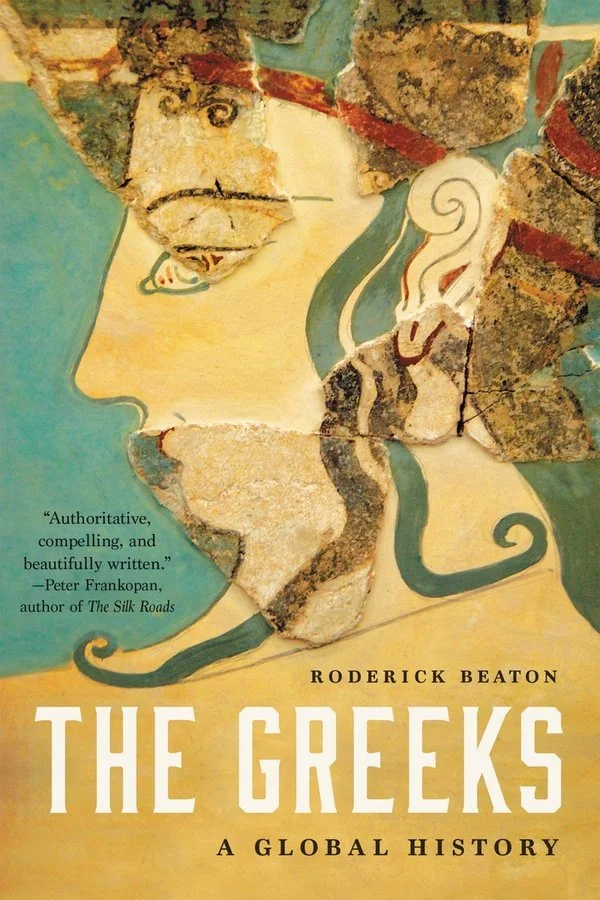
The Greeks: A Global History — Roderick Beaton (2021): A sweeping history of the Greek people, from the Bronze Age and Mycenae to modern Greece and the worldwide diaspora.
Travelreads is proud to partner with Bookshop.org, which supports independent bookstores through every purchase made on its platform.Explore more books that bring Greece’s history, culture, landscapes, and stories to life on our Greece destination page.