The Mountain That Filled With Gates, Fushimi Inari

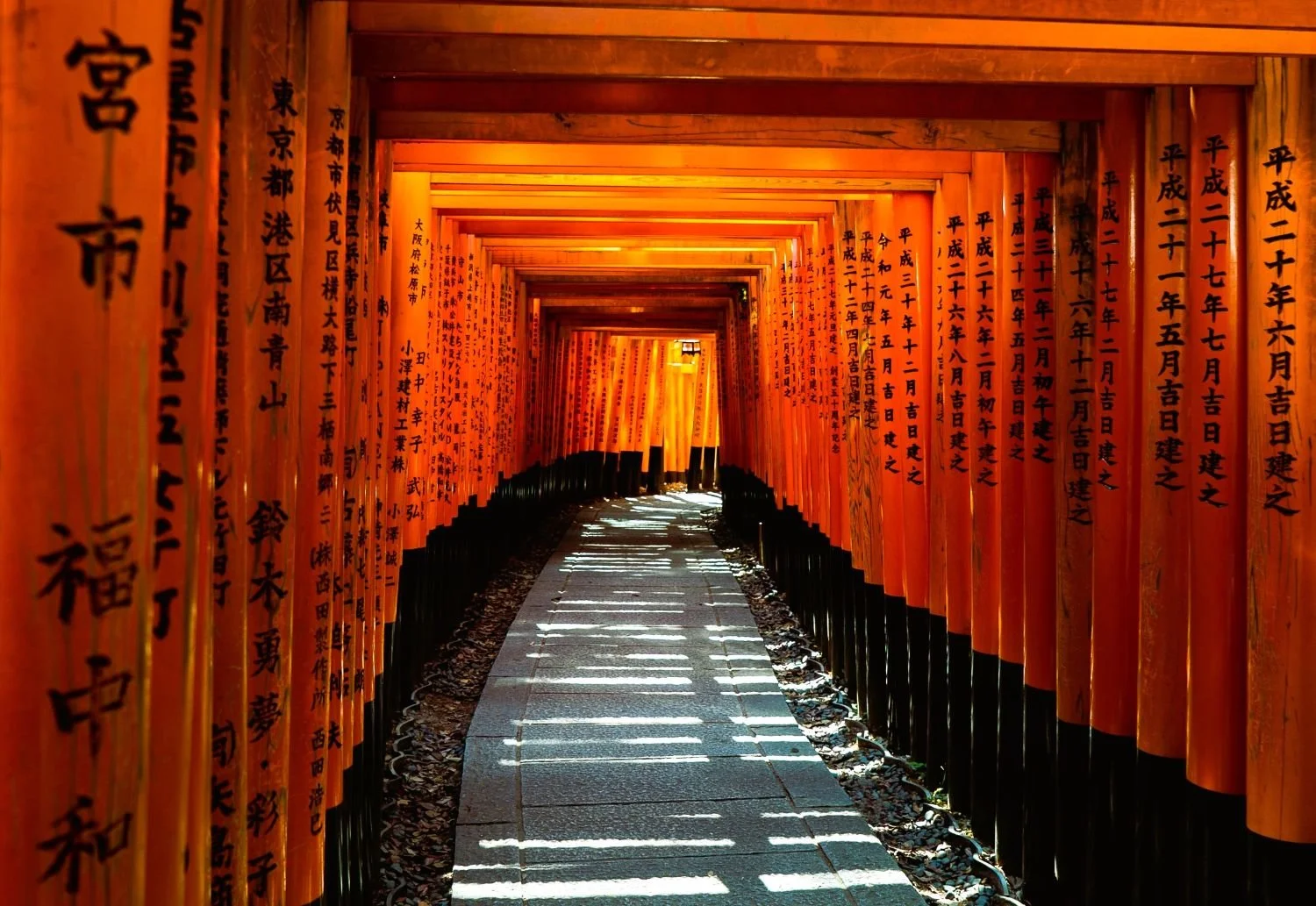
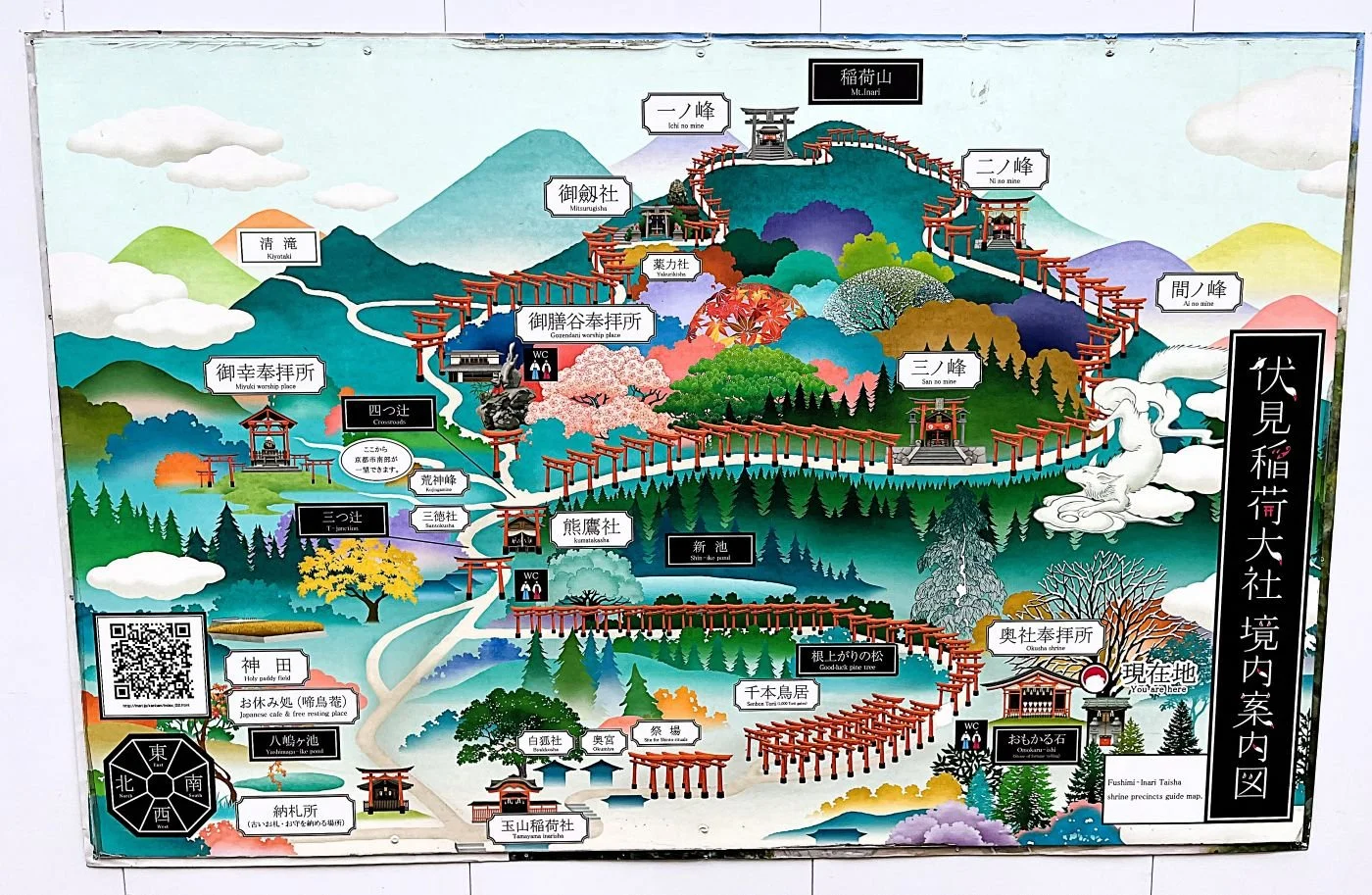
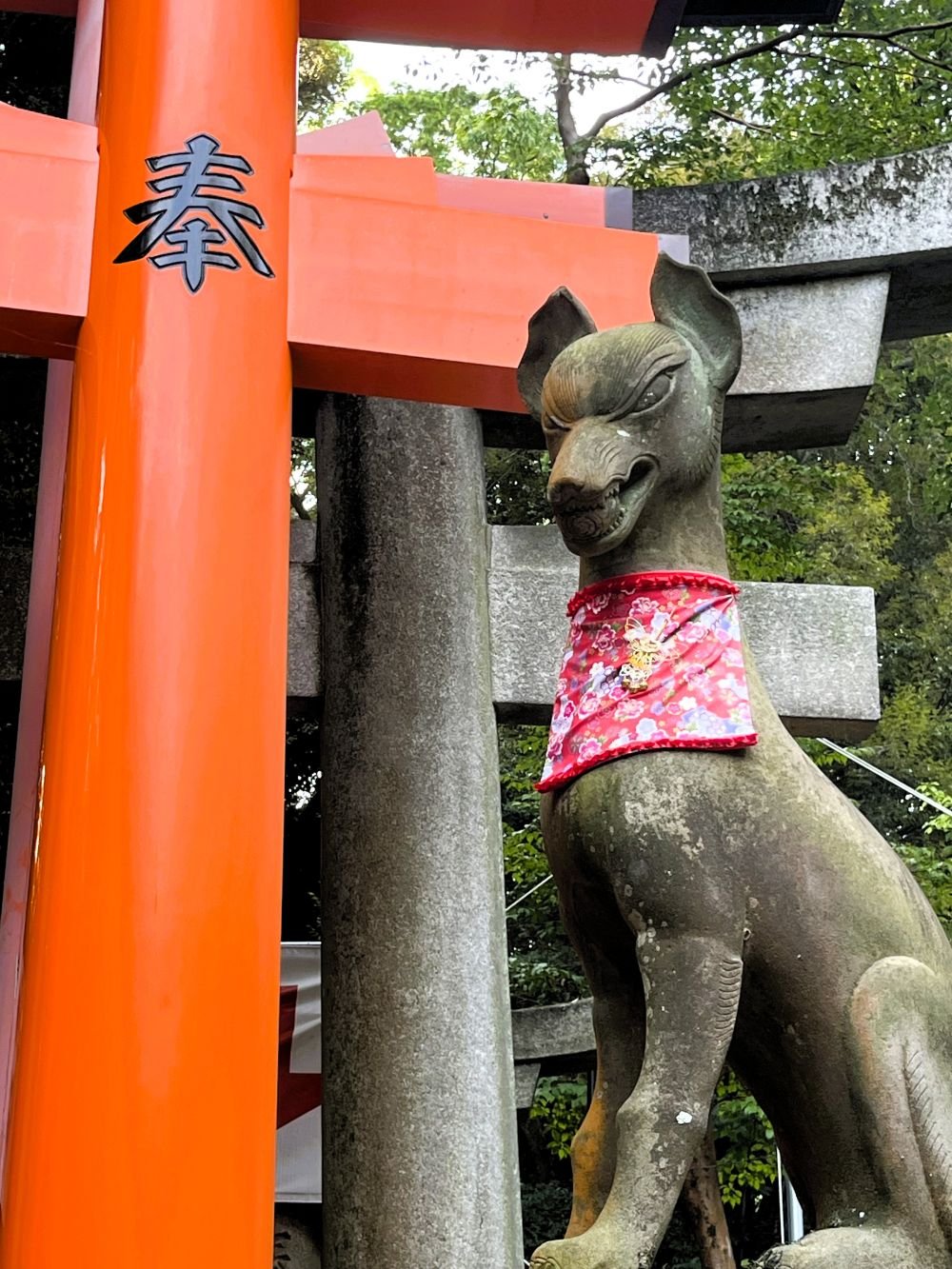
Fushimi Inari is one of Japan’s oldest Shinto shrines, founded in 711 on the slopes of Inariyama in what is now southern Kyoto. Today, roughly 10,000 vermilion torii gates are scattered along paths across the 233-meter-high mountain, sometimes standing apart and sometimes packed tightly enough to form the orange tunnels that have become one of Japan’s most recognizable sights. To follow the full mountain circuit is a walk of about four kilometers and roughly two hours, passing through gates for much of the way as the route climbs through forest, smaller shrines and sacred sites before circling back down.
The shrine is dedicated to Inari, a kami—roughly, a Shinto god or sacred presence—associated first with rice and harvests and, over time, with prosperity more broadly. A deity who could help crops flourish also made sense to someone hoping a shop, workshop or family business would flourish.
By the early 1600s, Kyoto was a very different place from the imperial capital of centuries earlier. Political power had shifted elsewhere, but the city remained crowded with commerce and craft. Silk was being woven in Nishijin. Merchants traded in the busy central districts. Artisans produced paper, lacquerware, ceramics, clothing and countless other goods, and family businesses could prosper through what they made and sold. In this increasingly commercial world, Inari's association with abundance had an obvious appeal beyond the rice fields.
That is the world in which the torii began to multiply.
Nobody seems to know who purchased the first one, and there is no known moment when anyone decided to create a row of gates. What the shrine can say is that donating torii had become widespread as an offering by the beginning of the Edo period. The practice carried an appealing bit of wordplay: tōru, meaning “to pass through,” could suggest that a prayer had successfully passed through to the deity. Worshippers began dedicating torii, and the offerings accumulated along the paths of the sacred mountain.
It is useful to picture the donors not simply as anonymous worshippers but as people with very practical hopes. A textile merchant might worry about whether orders would continue coming. A shopkeeper might want a new business to succeed. A sake brewer, craftsman or trading family might have enjoyed a prosperous year and wanted that good fortune to continue.
And a torii was a wonderfully tangible kind of offering. The donor could pay for an actual wooden gate to be made and placed on the mountain, with the person's, family's or company's name inscribed on it. The black lettering seen on the backs of the gates today therefore changes the way they look once you know what it means. What initially appears to be one enormous orange structure is actually thousands of individual objects, paid for by different people at different moments.
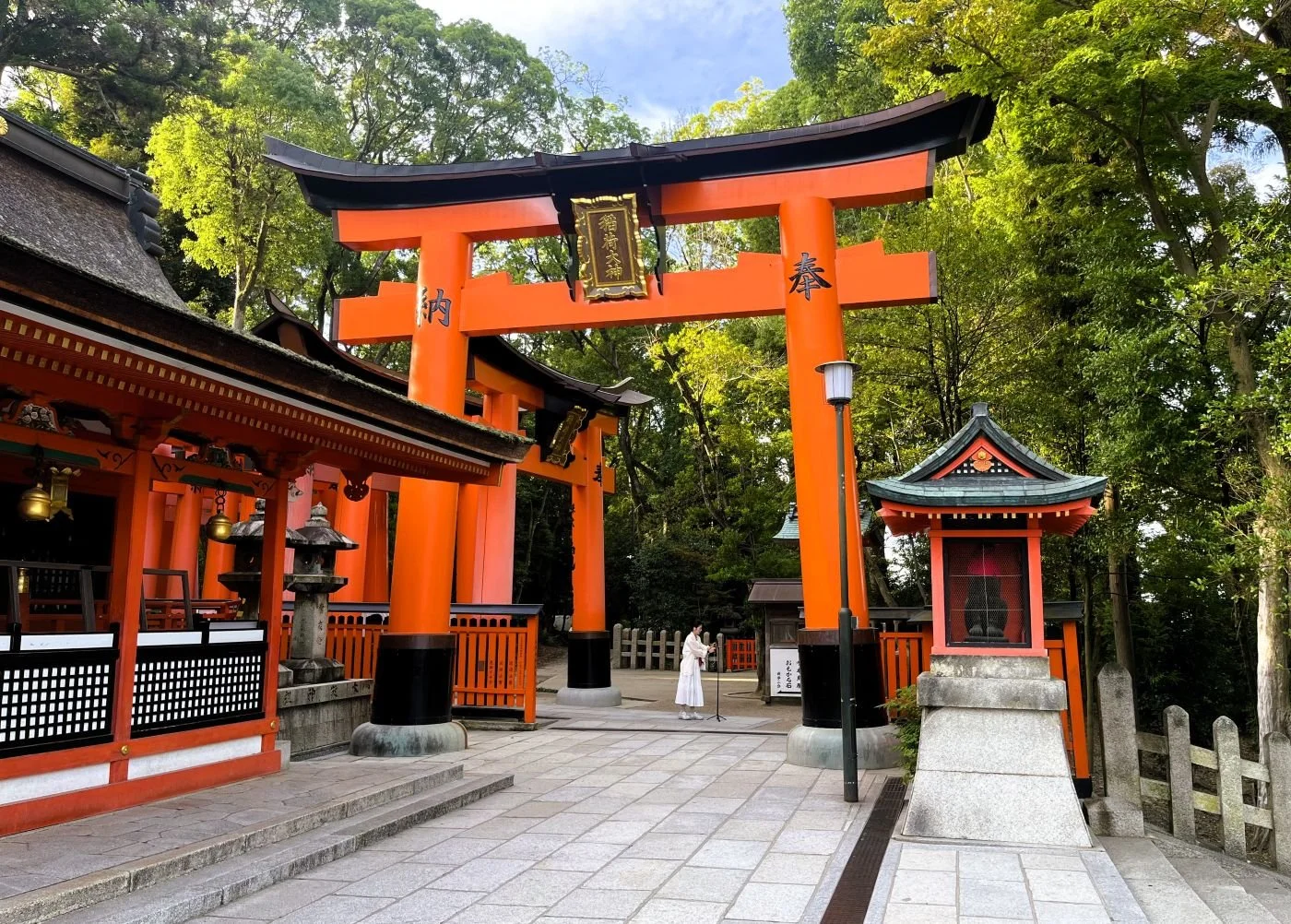
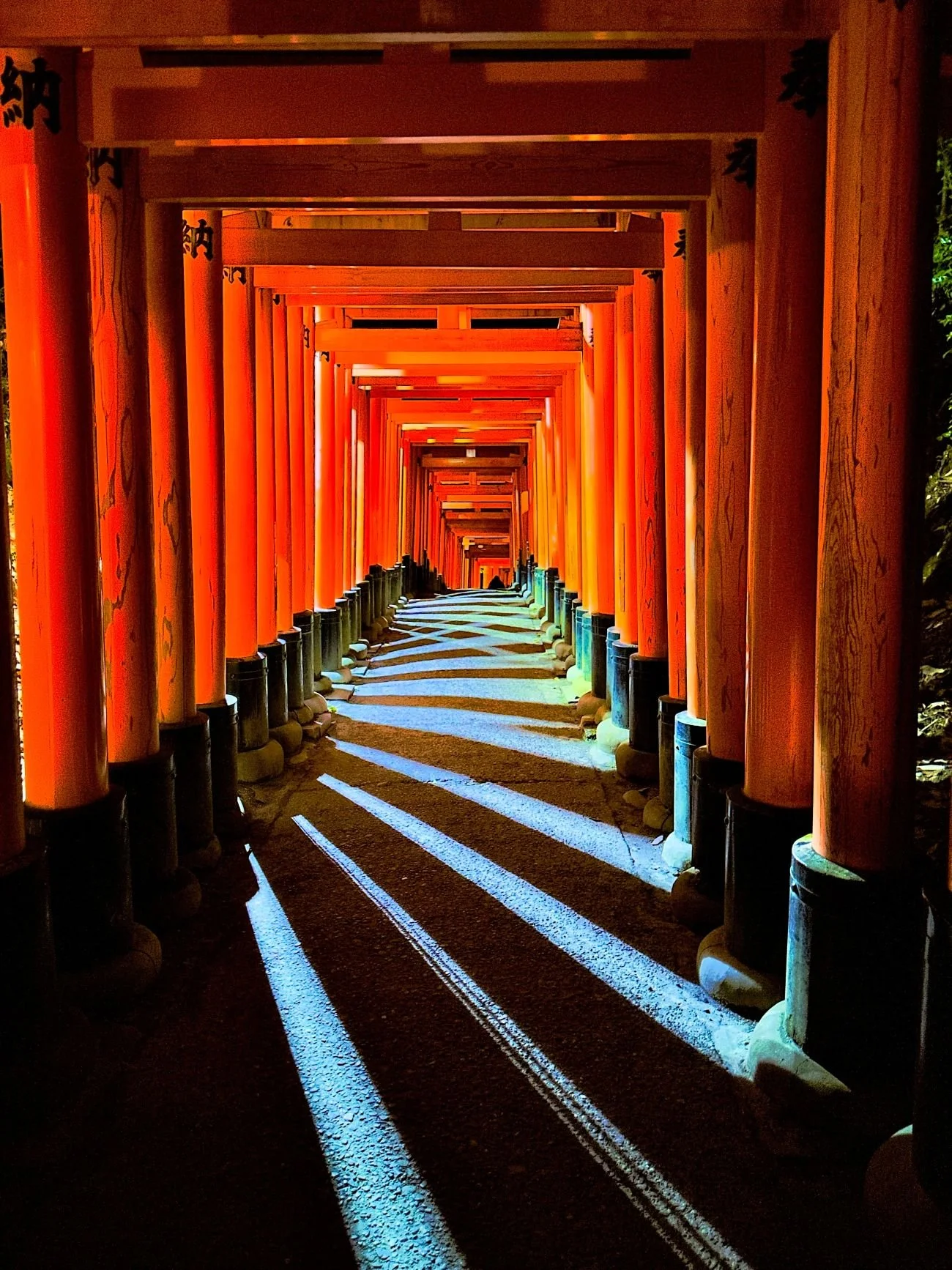
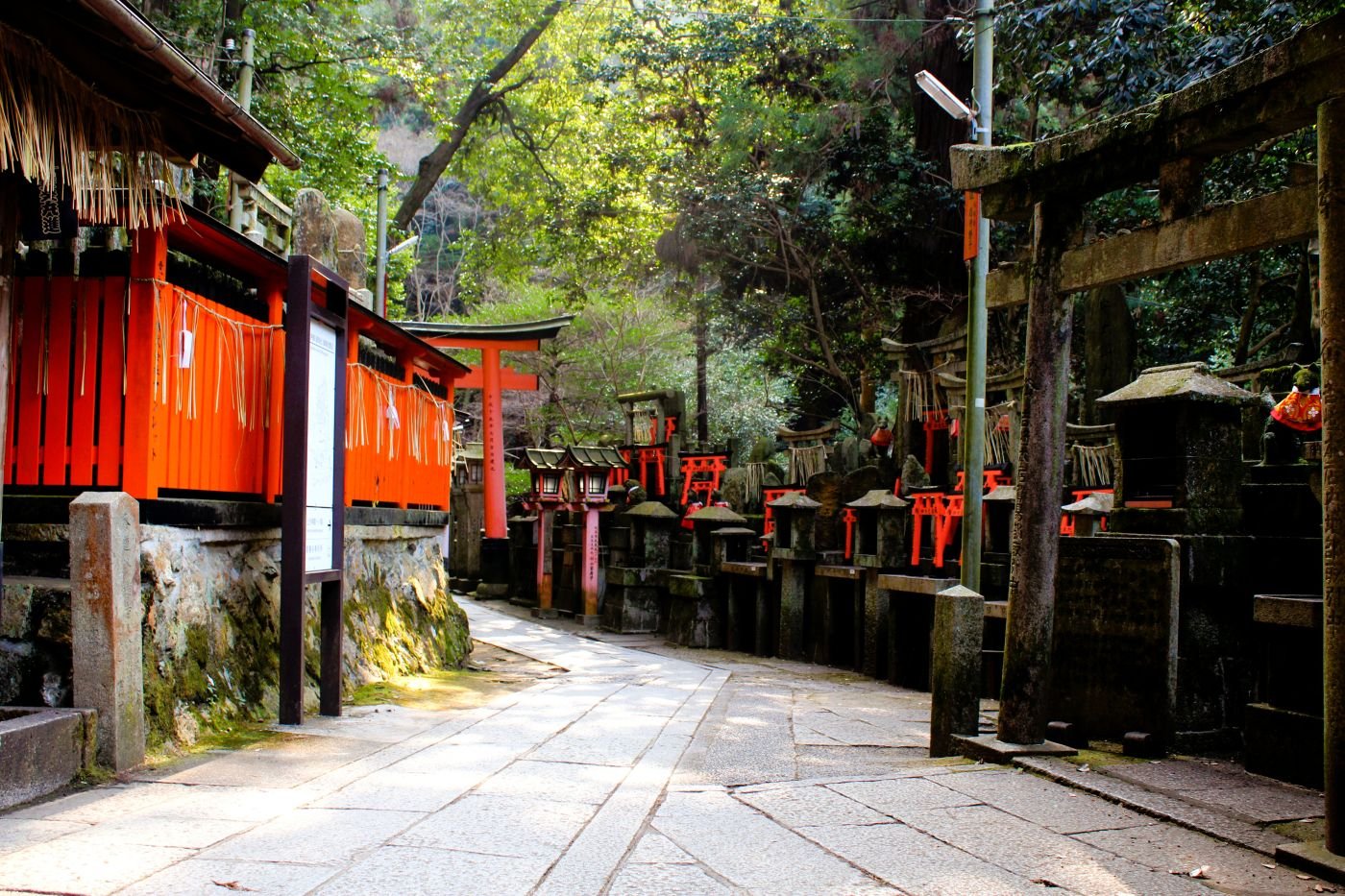
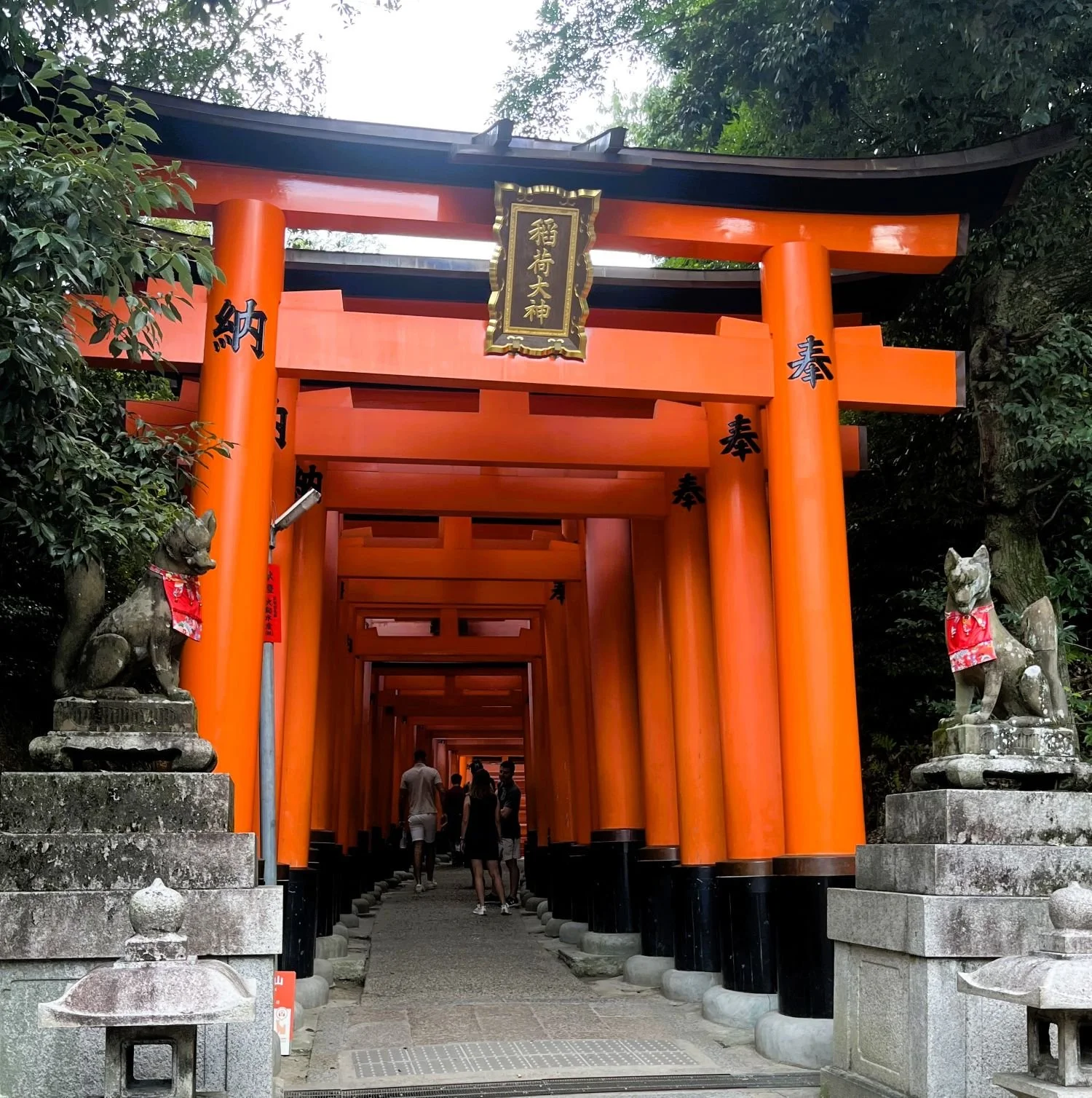
The gates themselves were made by craftsmen from timber, traditionally cedar, shaped into posts and crosspieces and finished in the vivid vermilion associated with Inari shrines. Larger donations could mean larger gates. The pieces then had to reach their position on Inariyama and be erected there—a more substantial undertaking for a large torii farther up the mountain than the finished gate suggests.
This happened one donation at a time. There was no master plan calling for 10,000 gates, and the famous tunnels were not conceived as a single work of architecture. There must have been a time when a visitor encountered an occasional donated torii on the mountain, then more of them, then clusters and rows. As generations continued to give, the spaces between them filled in and at some point those separate offerings began to create corridors.
And it still isn't finished.
Individuals and companies can donate a full-sized torii at Fushimi Inari today. It is not merely a symbolic contribution to the shrine: the shrine still accepts applications for actual gates to be erected. A prospective donor contacts the shrine office's management section, and applications are also handled through several of the traditional teahouses located among the sacred sites on the mountain.
The current prices make the tradition surprisingly concrete. The smallest listed full-sized gate, a No. 5 torii, begins at ¥300,000. Larger gates rise through ¥567,000, ¥702,000 and ¥1 million, with a No. 10 gate beginning at ¥1.89 million. A person or business can therefore make essentially the same decision that generations of worshippers made before them: choose to spend real money on a gate, have it dedicated in their name, and add another physical piece to Inariyama.
The surrounding world has changed almost beyond recognition since Kyoto's Edo-period merchants first embraced the practice. Businesses became corporations, Japan industrialized, and Fushimi Inari itself became an international attraction photographed by millions of visitors. Yet new torii continue to appear among the old ones.
That makes Fushimi Inari something slightly different from the ancient monument it appears to be in photographs. The shrine is ancient, but the landscape of gates has never really been finished. It grew out of thousands of separate decisions, made over centuries, and someone can still make the next one today.
For readers who want to go deeper into the world behind Fushimi Inari, Karen A. Smyers’s The Fox and the Jewel is an unusually good companion. Drawing on extensive research into Inari worship, the book explores how people understand Inari, the role of foxes, the meaning of sacred places, and the very personal ways worshippers approach prosperity, protection, and belief. It adds useful context to the mountain without reducing it to a set of rituals or symbols. You can find The Fox and the Jewel in the Travelreads store on Bookshop.org. Travelreads partners with Bookshop.org because it offers a simple way to recommend books while supporting independent bookstores.