The Country That Gave Its Children a Library

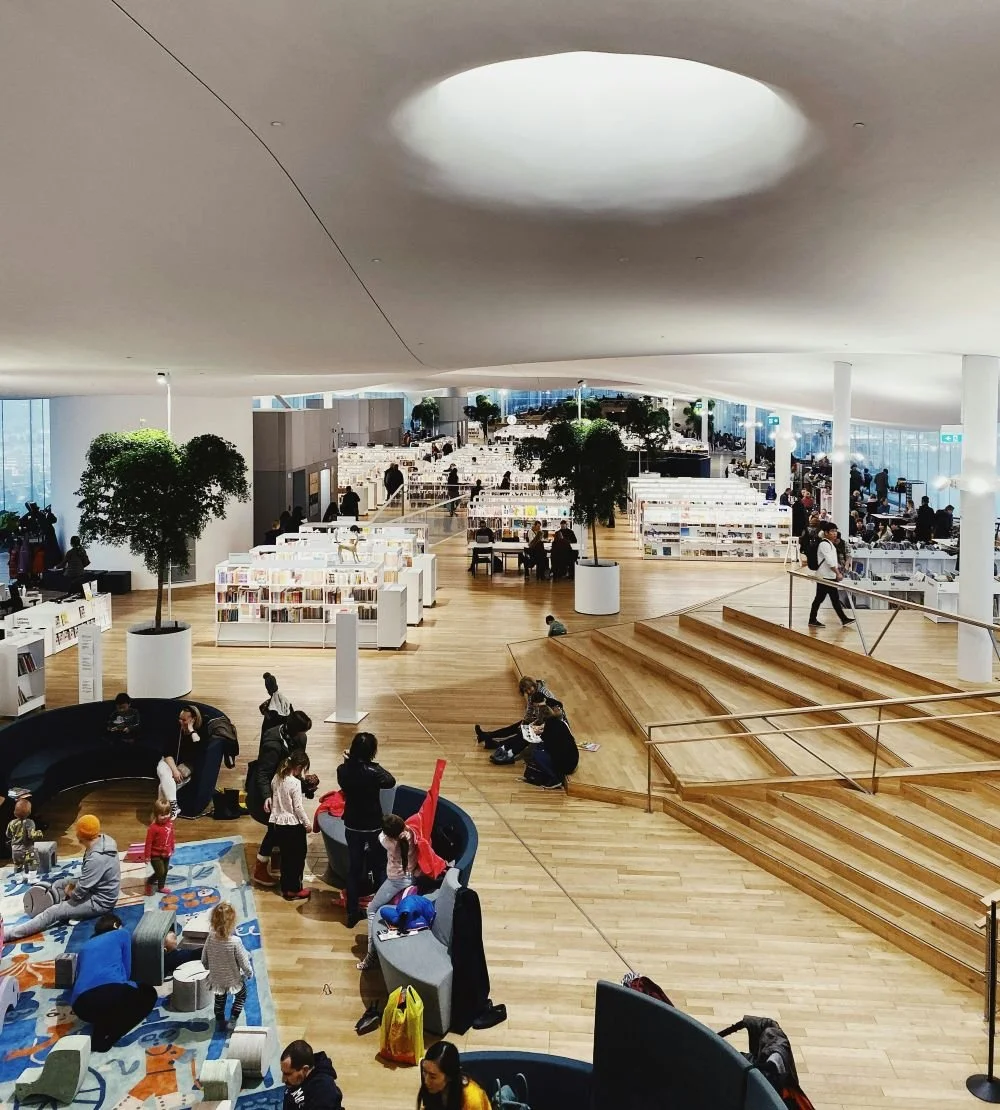


On a Saturday morning at Oodi, Helsinki’s enormous central library, the name itself offers a clue to the building’s ambition. Oodi means “ode” in Finnish, and the library was conceived as exactly that: a celebration of reading, creativity, and public life.
The idea becomes especially clear on the top floor, where children scatter across the open space. Some head for the books. Others climb onto broad steps, settle into cushions, join a game, or follow a parent toward one of the library’s play spaces. A toddler may spend more time crawling than reading. An older child can disappear with a book while the rest of the family stays nearby.
This is exactly how Oodi is meant to work. Its children’s area is not a quiet room where young visitors are expected to sit still. Reading, playing, talking, exploring, and simply spending time together all belong in the same space. For Finnish children, the library is not only somewhere to go for books. It is somewhere to go.
That makes Oodi’s origin story especially fitting. The library opened in 2018 as Finland marked a century of independence and was conceived as a gift to the Finnish people. There is something wonderfully revealing about that choice. To commemorate a national milestone, Finland created a place people could enter every day—a place for reading, making, meeting, playing, and simply spending time together.
Oodi is also worth seeking out simply as a place to visit. Designed by Helsinki-based ALA Architects, the building combines a sweeping wooden façade with glass and steel, and its three floors have distinctly different personalities. The airy upper level, often called “Book Heaven,” holds the main collection and children’s area beneath a rolling white ceiling and walls of glass. The building is large and ambitious, but the effect is surprisingly warm. It feels less like a monument to books than a place that invites you to pick one up, look around, and stay awhile.
Finland has spent years at the top of the World Happiness Report. We have no idea whether places like Oodi have anything to do with that, but we like to think they might. There is something hopeful about a country choosing to make places like this part of everyday life—beautiful, welcoming spaces where people can read, gather, play, and simply spend time together.
Oodi gives children a physical place for curiosity—to browse, play, wander, and discover something they did not arrive looking for. But to understand another side of Finnish childhood, it helps to leave the library behind and enter a much stranger place.
Welcome to Moominvalley
Created by Finnish writer and artist Tove Jansson, Moominvalley is filled with forests and islands, sudden storms and long winters, mysterious visitors and unexpected journeys. Its inhabitants wander off, get lost, become frightened, make friends, and eventually find their way home. The stories are whimsical, but they are never merely cute. They give children something Oodi does too: the freedom to explore a world without knowing exactly what they will find.
That connection makes the Moomins more than a charming Finnish souvenir. Oodi creates space for curiosity with architecture. Jansson created it with stories. The Moomins first appeared in the 1940s and have since become one of Finland’s most recognizable cultural creations. Their round white figures now appear on mugs, clothing, toys, and shops throughout the country, which can make it easy to underestimate the books themselves.
Reading Moominvalley
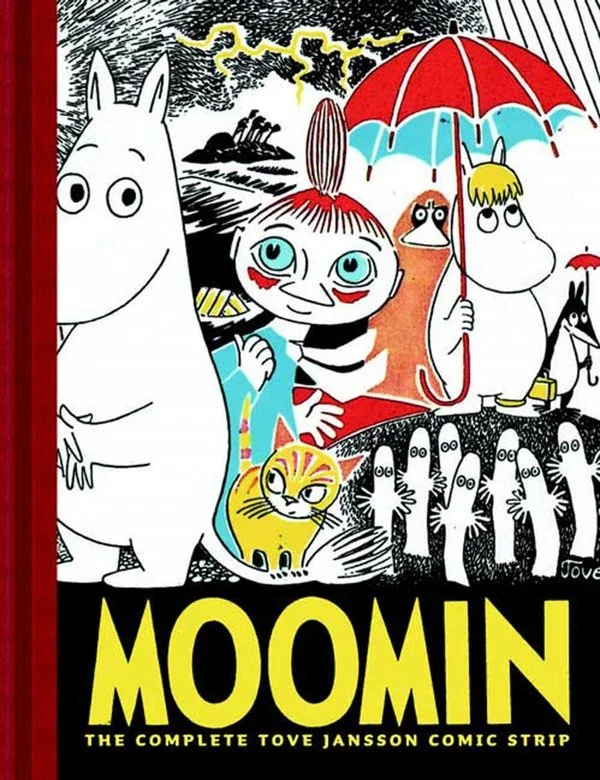
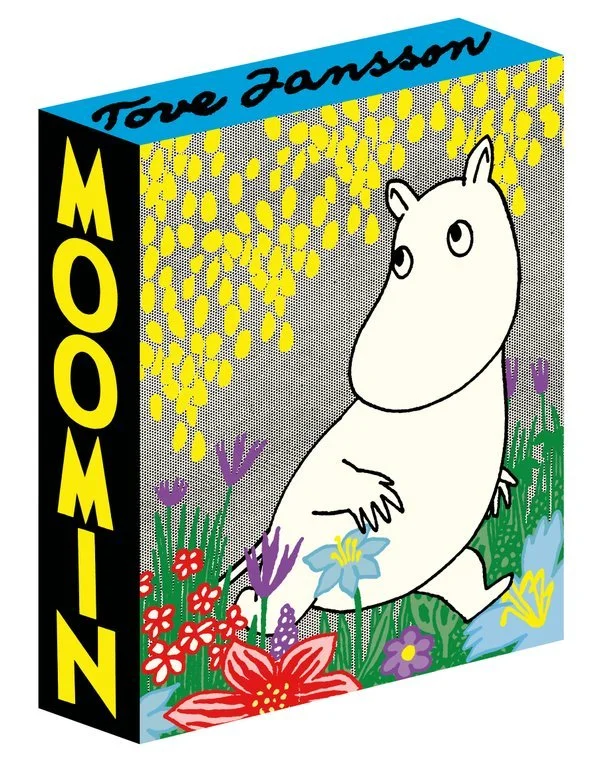
For families who want to spend more time in that world, Tove Jansson’s original Moomin stories are available in several collected editions, including the Moomin: The Complete Tove Jansson Comic Strip series..
For families traveling beyond Helsinki, the Moomin trail can continue. Tampere is home to the world’s only Moomin Museum, built around Jansson’s original illustrations and artwork, while Finland’s coast and archipelago offer a chance to encounter some of the landscapes that fed her imagination.
That may be the most interesting connection between Oodi and Moominvalley. Neither tells children exactly where curiosity should lead. Both simply give it somewhere to go.
Travelreads is proud to partner with Bookshop.org, whose mission is to support independent bookstores. Purchases made through these links may earn Travelreads a small commission at no additional cost to readers.