More Than a Masterpiece: What the Sagrada Família Reveals About Barcelona
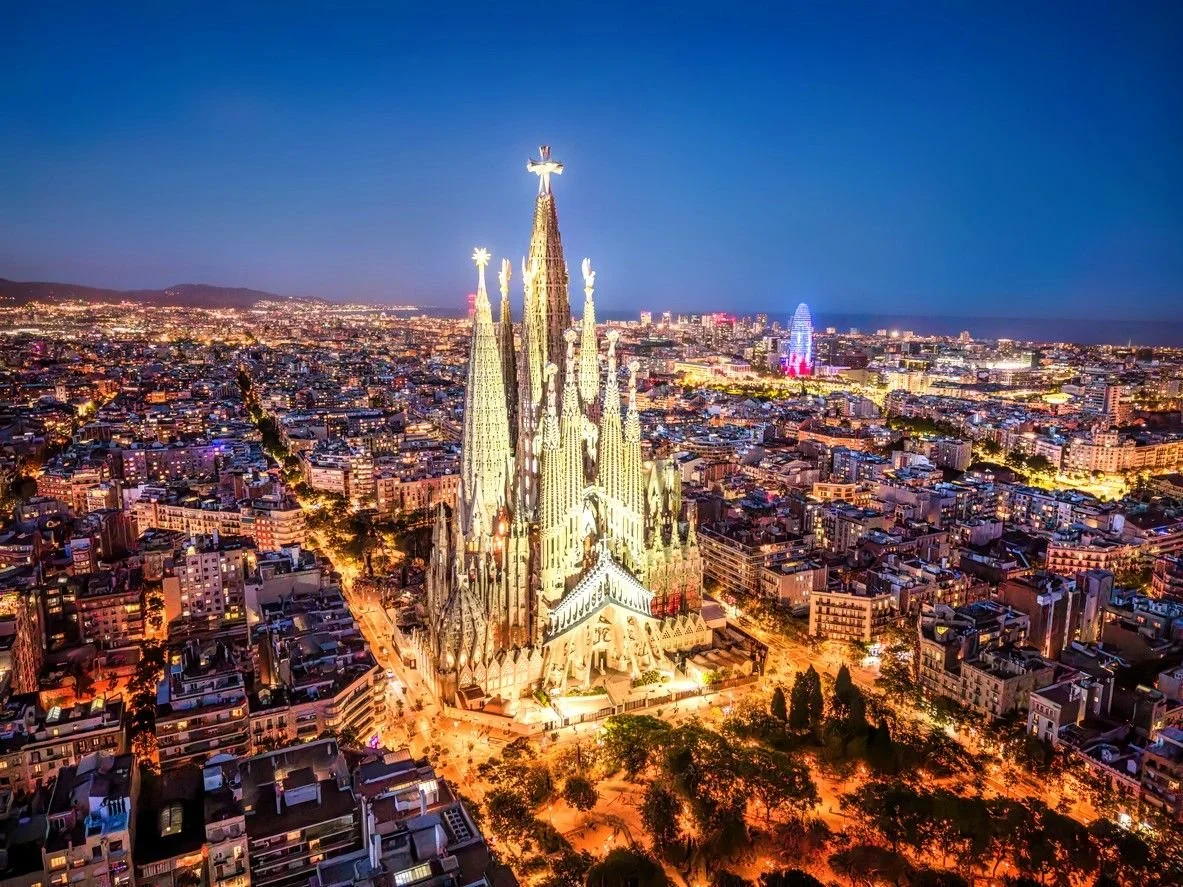
After 144 years, Barcelona has finally seen Antoni Gaudí’s greatest vision rise to its full height.
In February 2026, the final section of an enormous cross was lifted into place atop the Sagrada Família’s central Tower of Jesus Christ. Standing 172.5 meters above Barcelona, the completed tower became the tallest point of the basilica and the defining element of the extraordinary church Gaudí had imagined more than a century earlier. Its formal inauguration followed on June 10, exactly 100 years after the architect’s death.
Work around the basilica will continue, particularly on the Glory Façade and its surroundings. But the completion of Gaudí’s tallest and most important tower marked a historic turning point. A building known around the world for being unfinished had finally reached the height and silhouette its architect intended. The timing could hardly be more remarkable. Gaudí devoted the final decades of his life to a church he knew he would never see completed. A century after his death, Barcelona finished the central tower that crowned his design.
It would be easy to treat this as a curious story about a construction project that took an unusually long time, but the Sagrada Família tells us something much more interesting about Barcelona.
The city is filled with places that stop you in your tracks. Stroll down Passeig de Gràcia and apartment buildings seem to ripple and shimmer. Wander the Gothic Quarter and medieval streets suddenly open onto lively squares. Walk through La Boqueria and even a market feels carefully composed, overflowing with color and craftsmanship.
And then there is the Sagrada Família.
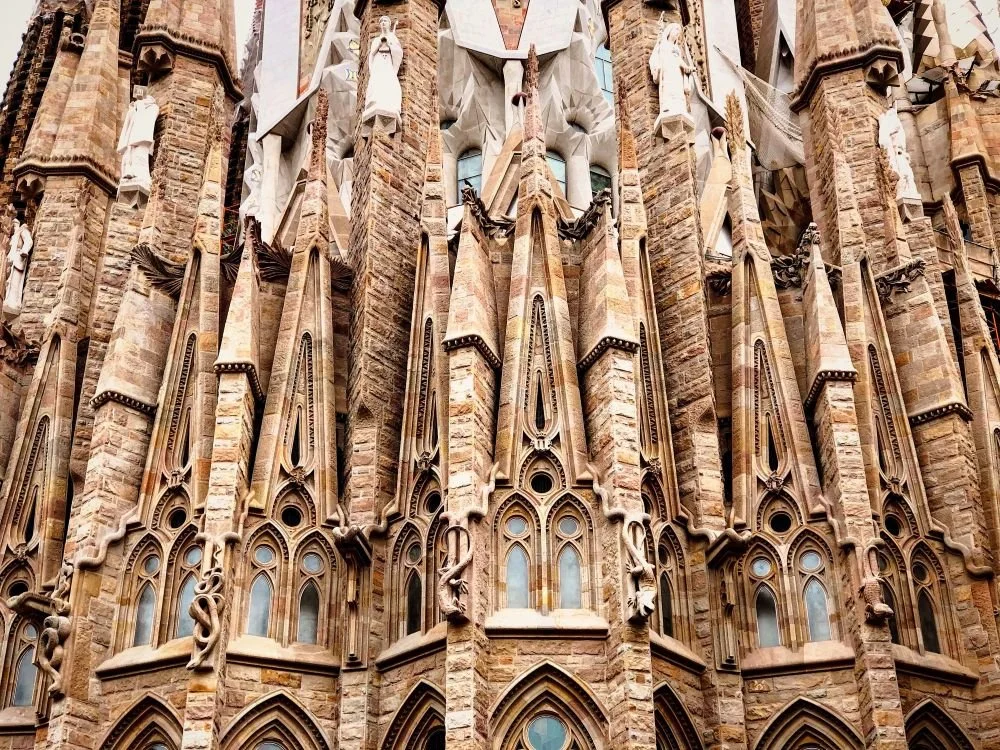
Its towers seem almost alive, rising above the city like giant sandcastles sculpted from stone. The Nativity Façade is crowded with animals, plants, angels, and scenes celebrating life. On the opposite side, the Passion Façade is stark and angular, its figures carved with a severity that reflects suffering and death. The two façades feel almost as though they belong to different buildings, yet together they form part of a carefully conceived whole.
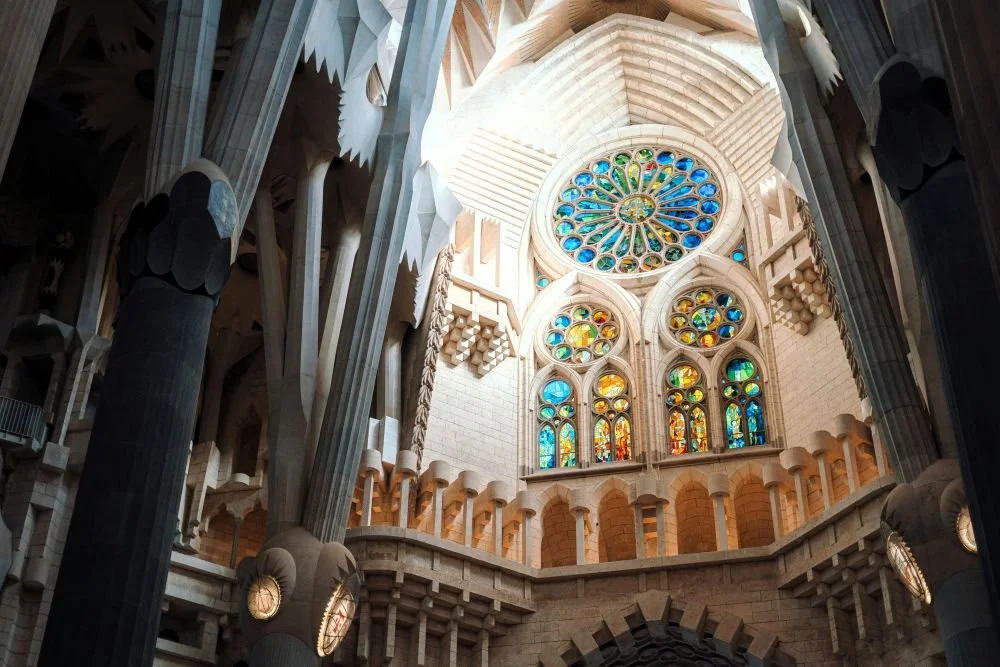
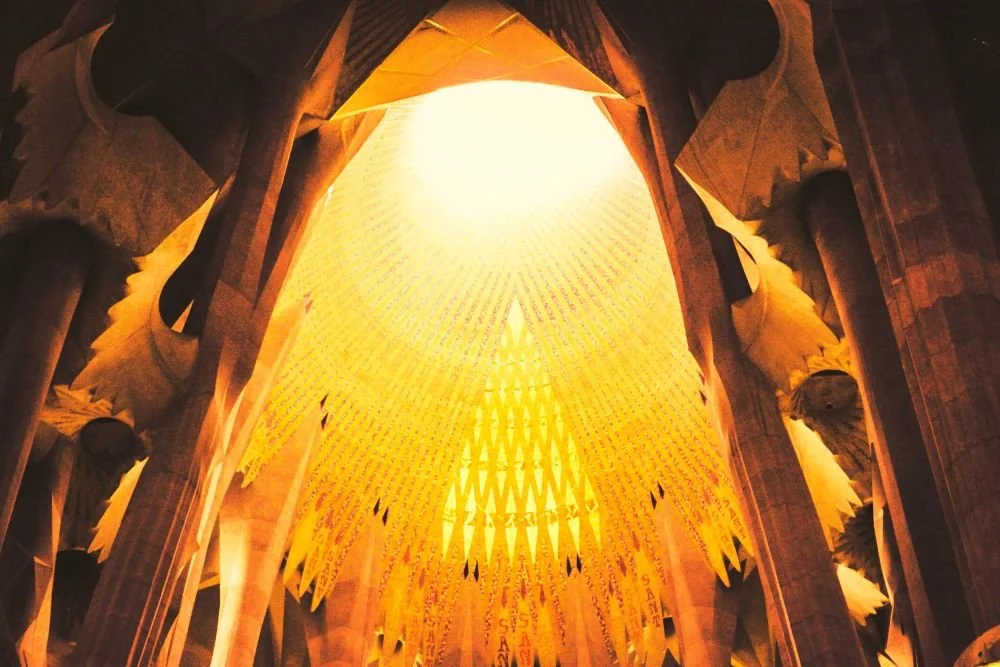
Inside, the experience becomes even more extraordinary. Massive columns branch overhead like trees, supporting a ceiling that seems to float above the nave. Gaudí designed the interior to evoke a forest, using geometry drawn from trunks, branches, shells, honeycombs, and other natural forms. Sunlight passes through stained-glass windows and spreads shifting blues, greens, reds, and golds across the stone as the day progresses. It is less like entering a conventional church than stepping inside a world imagined from the ground up.
The story began in 1882, when construction started on what was intended to be a relatively traditional Catholic church. Gaudí assumed responsibility for the project the following year and transformed it completely. Every façade would tell a different part of the Christian story. Eighteen towers would represent the apostles, the evangelists, the Virgin Mary, and Jesus Christ. The central tower would rise above all the others, but remain slightly lower than nearby Montjuïc because Gaudí believed that human creation should never surpass the work of God.
As the years passed, the Sagrada Família became his life’s work. Gaudí gradually stepped away from almost every other commission and devoted himself increasingly to the basilica. When he died after being struck by a tram in 1926, only a small portion had been completed. For most projects, that would have been the end, but instead it became the beginning of a far longer story.
Construction depended largely on private donations and advanced slowly. During the Spanish Civil War, Gaudí’s workshop was attacked and many of his drawings, notes, and intricate plaster models were destroyed. Architects and craftsmen spent years reconstructing his intentions from surviving photographs and shattered fragments. Later generations used computer modeling, digital fabrication, and advanced stone-cutting techniques to realize geometries that would have been extraordinarily difficult to build when Gaudí first conceived them.
The Sagrada Família reflects a city that repeatedly chose craftsmanship over convenience, vision over shortcuts, and excellence over speed. Barcelona could have simplified the design, lowered its ambitions, or eventually declared the church finished enough. Instead, generations of architects, engineers, sculptors, stoneworkers, donors, and residents accepted responsibility for carrying an extraordinary idea forward.
That spirit feels woven throughout Barcelona. You see it in Catalan Modernisme, where apartment buildings such as Casa Batlló and La Pedrera reject the idea that practical structures must also be ordinary. You hear it inside the Palau de la Música Catalana, where sculpture, stained glass, mosaics, ironwork, and music come together in one exuberant celebration of Catalan culture. You find it in markets, workshops, restaurants, and neighborhood bakeries where presentation and technique are treated as expressions of pride rather than unnecessary decoration. Even FC Barcelona reflects the same belief that the city’s institutions can stand for something larger. Its famous motto, Més que un club—“More than a club”—expresses an identity extending far beyond sport.
The Sagrada Família may be Barcelona’s greatest expression of that idea.
Its completion is not remarkable simply because construction took 144 years. It is remarkable because the city continued pursuing Gaudí’s vision across wars, political upheaval, technological change, and the passing of generations. Barcelona did not merely preserve an unfinished masterpiece. It kept building one.
Most visitors arrive expecting to admire an extraordinary work of architecture. They leave having encountered something rarer: a city willing to devote more than a century to an almost impossible standard of beauty. Perhaps that is why the Sagrada Família feels so unforgettable. Not because it took so long to build, but because Barcelona never stopped believing it was worth building well.
One Book to Read Before You Visit
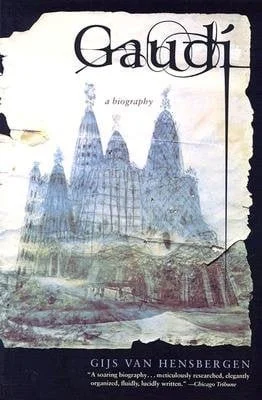
links to Bookshop.org
If the Sagrada Família leaves you wondering how one architect’s extraordinary vision came to define an entire city, there is one book we recommend above all others.
Gaudí — Gijs van Hensbergen (2001): A richly detailed biography that is as much about Barcelona and Catalonia as it is about Gaudí himself. Van Hensbergen traces the architect’s unconventional life, his fascination with natural forms, and the evolution of the Sagrada Família from an inherited commission into the consuming project of his final years. More than an architecture book, it reveals the imagination, religious conviction, cultural identity, and uncompromising pursuit of excellence behind the basilica that continues to define Barcelona.
Travelreads is proud to partner with Bookshop.org, supporting independent bookstores with every purchase made through our links. To continue exploring the culture, history, and remarkable places of this endlessly fascinating country, visit the Travelreads Spain destination page.