The Stories That Explain Appalachia




For many travelers, Appalachia begins with a trail.
Perhaps it's the Appalachian Trail, winding more than 2,000 miles through forests and over mountain ridges. Or maybe it's a drive along the Blue Ridge Parkway, a weekend in Asheville, a visit to Great Smoky Mountains National Park, or simply a road that disappears into the hills.
People come for the scenery. They leave talking about something else. Again and again, visitors remember the music drifting from a local venue, the family-run diner, the craft studio tucked into a mountain town, the conversation with someone proud to call these mountains home. The landscapes are spectacular, but it is often the people—and their connection to this place—that linger long after the trip ends.
The best books about Appalachia help explain why.
Where Is Appalachia?
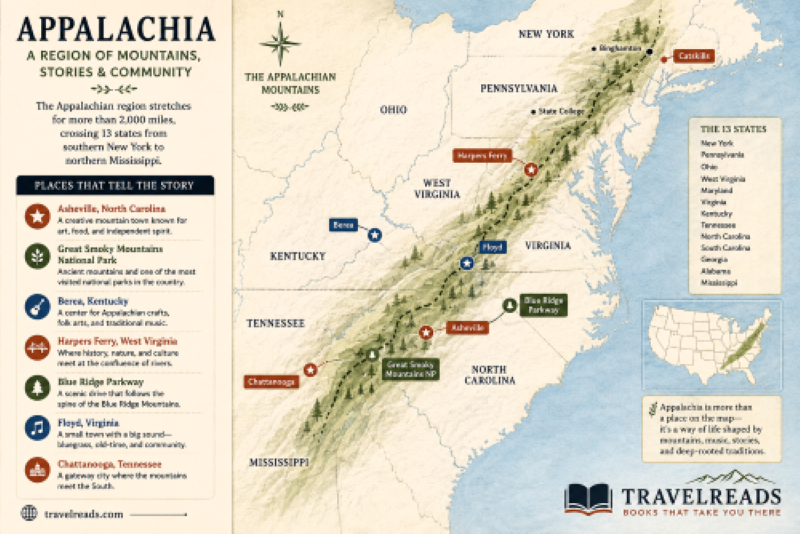
Appalachia stretches from southern New York to northern Mississippi, crossing parts of thirteen states and encompassing hundreds of communities. It isn't a single destination, nor does it fit neatly into the South, the Midwest, or the Northeast. Like any large region, it contains remarkable diversity. What many visitors discover, however, are shared threads running through the places they explore: traditions of music and storytelling, deep ties to family and community, remarkable craftsmanship, and an enduring relationship with the mountains themselves.
No single article—or book—can define Appalachia. These stories don't try to. Instead, they offer four different windows into a region whose greatest appeal extends far beyond its beautiful scenery. One theme quietly connects them all.
Each, in its own way, asks what it means to belong to a place.
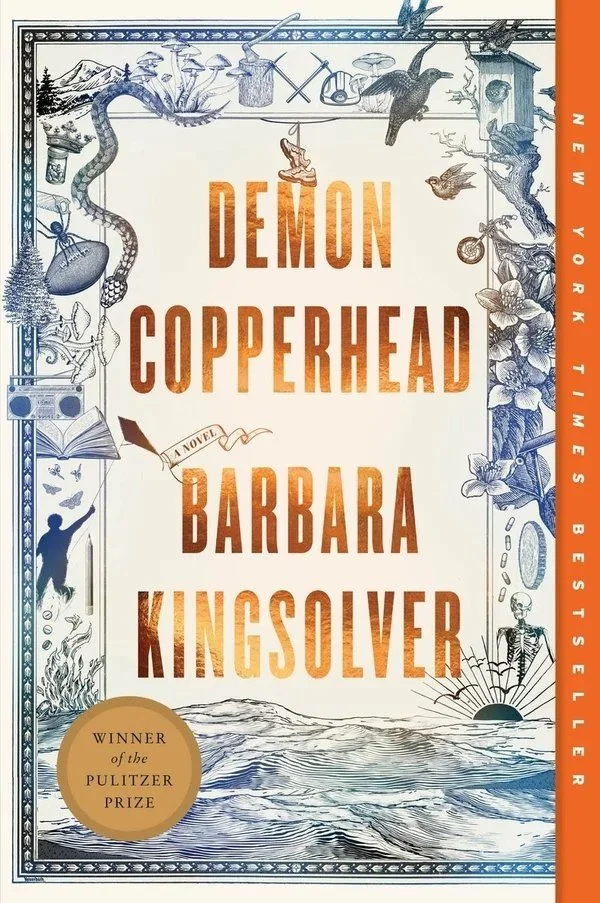
Demon Copperhead, by Barbara Kingsolver
Barbara Kingsolver's Pulitzer Prize-winning novel introduces readers to contemporary Appalachia through the unforgettable voice of Demon, a boy growing up in the mountains of southwestern Virginia. Inspired by David Copperfield, the novel confronts poverty, foster care, addiction, and the opioid crisis without ever reducing the region to those hardships alone.
Demon is fiercely funny, observant, and deeply rooted in the place that shaped him. Kingsolver portrays communities filled with generosity, loyalty, resilience, and humor alongside real struggles. The novel captures a tension found throughout Appalachian literature: a place can frustrate you, limit you, and break your heart, while still remaining part of who you are.
For travelers, Demon Copperhead offers something guidebooks cannot. It reveals the lived experiences behind the mountain landscapes, reminding readers that every valley and small town has stories that deserve to be heard.
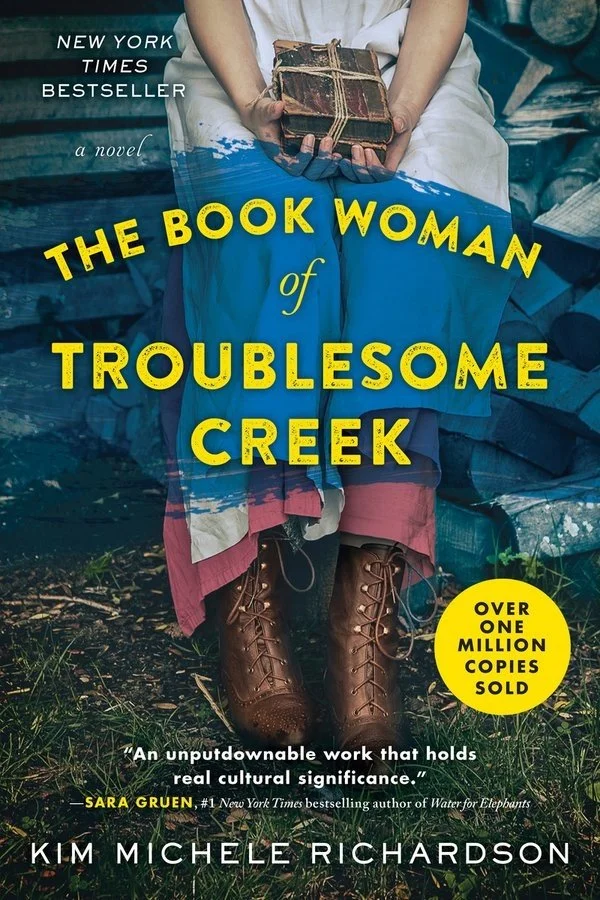
The Book Woman of Troublesome Creek, by Kim Michele Richardson
Set in the hills of eastern Kentucky during the Great Depression, this remarkable novel follows Cussy Mary Carter, a Pack Horse librarian who delivers books by mule to families living in remote mountain communities. Each journey introduces another household, another hollow, another glimpse into daily Appalachian life. Books become lifelines, connecting isolated communities to knowledge, entertainment, and hope.
Cussy herself occupies a complicated place within that world. As one of Kentucky's "Blue People," she faces prejudice even as she dedicates herself to serving her neighbors. Her story reminds readers that belonging is not simply about where you live. It is built through relationships, generosity, and shared responsibility for one another. Those qualities remain part of what many travelers appreciate most when exploring Appalachia today.
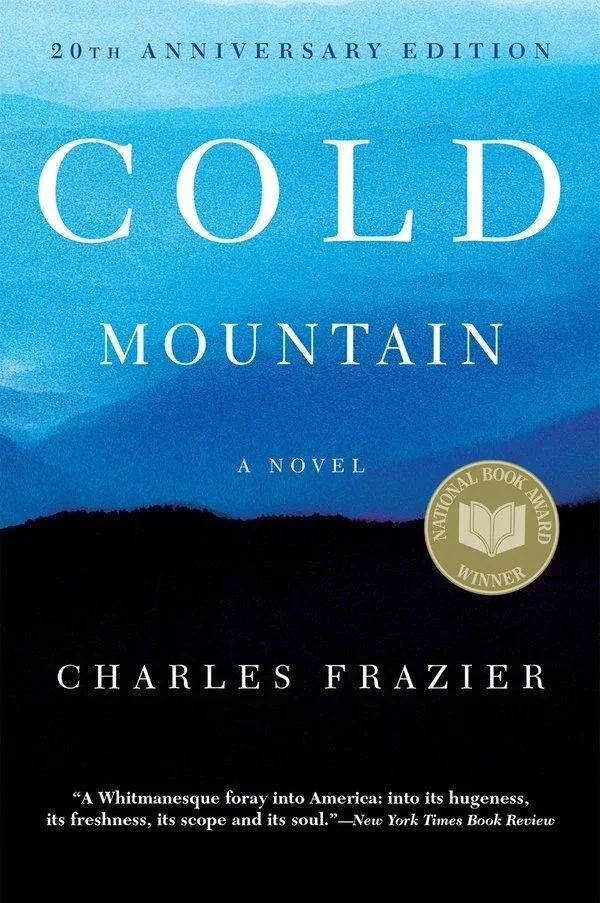
Cold Mountain, by Charles Frazier
Charles Frazier's beloved novel begins during the final years of the Civil War, but it ultimately becomes a story about home.
After suffering terrible wounds, Inman deserts the Confederate army and begins the long journey back to Cold Mountain and the woman he hopes is still waiting for him. Meanwhile, Ada Monroe struggles to survive on her family's farm with the help of the fiercely capable Ruby Thewes, whose knowledge of the land reflects generations of Appalachian life.
The mountains are far more than a backdrop. They shelter, challenge, isolate, and sustain the people who live among them. Every mile Inman walks deepens the novel's central question: what is worth returning home for? Few books capture the beauty of the Appalachian landscape so vividly, but its greatest achievement is revealing why that landscape matters so deeply to the people who call it home.
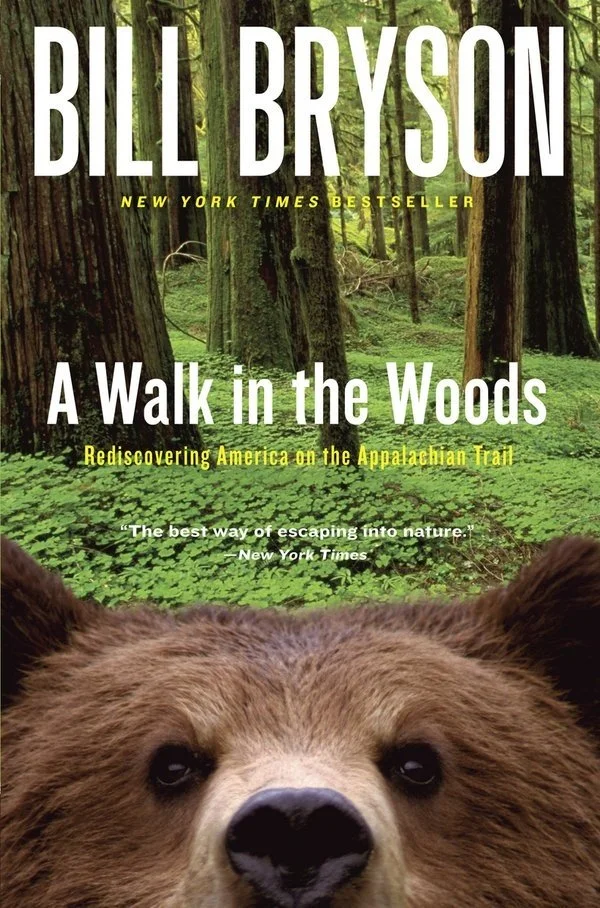
A Walk in the Woods, by Bill Bryson
For many readers, Bill Bryson provides the perfect introduction to Appalachia.
His decision to hike the Appalachian Trail with his hilariously unprepared friend Stephen Katz produces one of the funniest travel memoirs ever written. Their misadventures—aching legs, impossible climbs, questionable decisions, and frequent encounters with their own limitations—make the journey endlessly entertaining.
Yet beneath the humor lies genuine wonder. Bryson helps readers appreciate the extraordinary scale of the Appalachian Mountains and the trail that links them together. He reminds us why millions of people are drawn here every year, but the trail is only the beginning. It introduces travelers to the landscape. The stories of Kingsolver, Richardson, and Frazier introduce them to the people who have loved these mountains, struggled within them, left them, returned to them, and built lives among them for generations.
A Walk in the Woods remains one of the most beloved travel memoirs ever written. Click here to learn more about the wonderful Bill Bryson and to discover his remarkable work.
Reading Appalachia
No four books can explain a region as large and varied as Appalachia. Together, however, they illuminate one of the reasons so many travelers return. The mountains are undeniably beautiful. But what often stays with visitors is something less tangible: communities with deep roots, stories passed from one generation to the next, and the enduring connection between people and place.
Read these stories before you go, and the overlooks, mountain towns, and winding roads begin to tell a richer story of their own.
The links above take you to Bookshop.org, our preferred bookselling partner. Every purchase supports independent bookstores, and we're proud to partner with an organization that shares our belief in the enduring value of books and local bookshops.