From the family kitchens of Bologna to the pasta-making streets of Bari and a grandmother's table in Sicily, discover an Italy where food is about much more than what we eat.
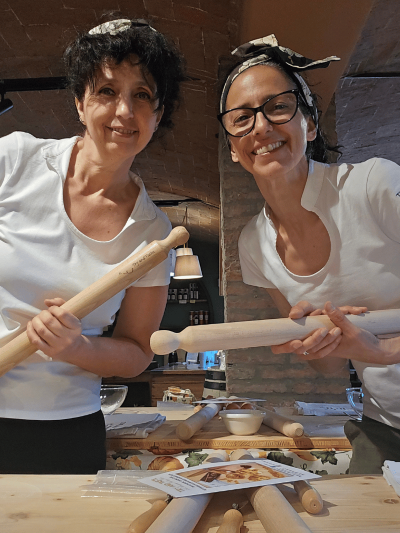
As little girls in Italy, sisters Monica and Barbara grew up learning the art of handmade pasta from their grandmother, affectionately known as Nonna Dolce. They learned to knead the dough, roll it into thin sheets, and shape it with their hands. Their grandmother was passing along something more valuable than a recipe: a family tradition that would stay with them for a lifetime. Today, the sisters share those same techniques with travelers visiting Bologna, inviting strangers into a culinary tradition that began in their grandmother's kitchen.
Across Italy, stories like theirs reveal something wonderful about the country's food culture. In family kitchens, neighborhood streets, and around dinner tables, recipes are passed between generations, carrying memories of the people and places that shaped them. And increasingly, travelers have the opportunity to become part of these traditions, learning not just how to prepare a local dish, but something about the lives of the people who make it.
Here are three places where cooking with Italy's grandmothers—or with the families preserving their recipes—offers a particularly memorable way to discover the country.
Bologna: A Grandmother's Legacy, Passed Down with Love
In Emilia-Romagna, food is inseparable from local identity. This is the region of Parmigiano Reggiano, traditional balsamic vinegar, and some of Italy's most beloved pasta dishes. In Bologna, the traditional sfogline are celebrated for their skill in rolling fresh egg pasta into impossibly thin sheets using long wooden rolling pins.
For Monica and Barbara, the art of handmade pasta began with their grandmother, Nonna Dolce. Those childhood lessons became the inspiration for Try And Taste, through which the sisters now welcome visitors to learn the same family techniques. Their private classes use traditional tools, simple ingredients, and the patient process of making pasta entirely by hand.
There's something special about learning a recipe from the people who inherited it. How thin should the dough be? How do you know when it's ready? Some answers are easier to demonstrate than explain, learned through watching someone's hands and trying the movement yourself. For the sisters, teaching these skills is a way of honoring their grandmother. For visitors, it's a chance to understand a little more about the family traditions that make Bologna's food culture so distinctive.
Bari: The Street Where Grandmothers Keep a Neighborhood Tradition Alive
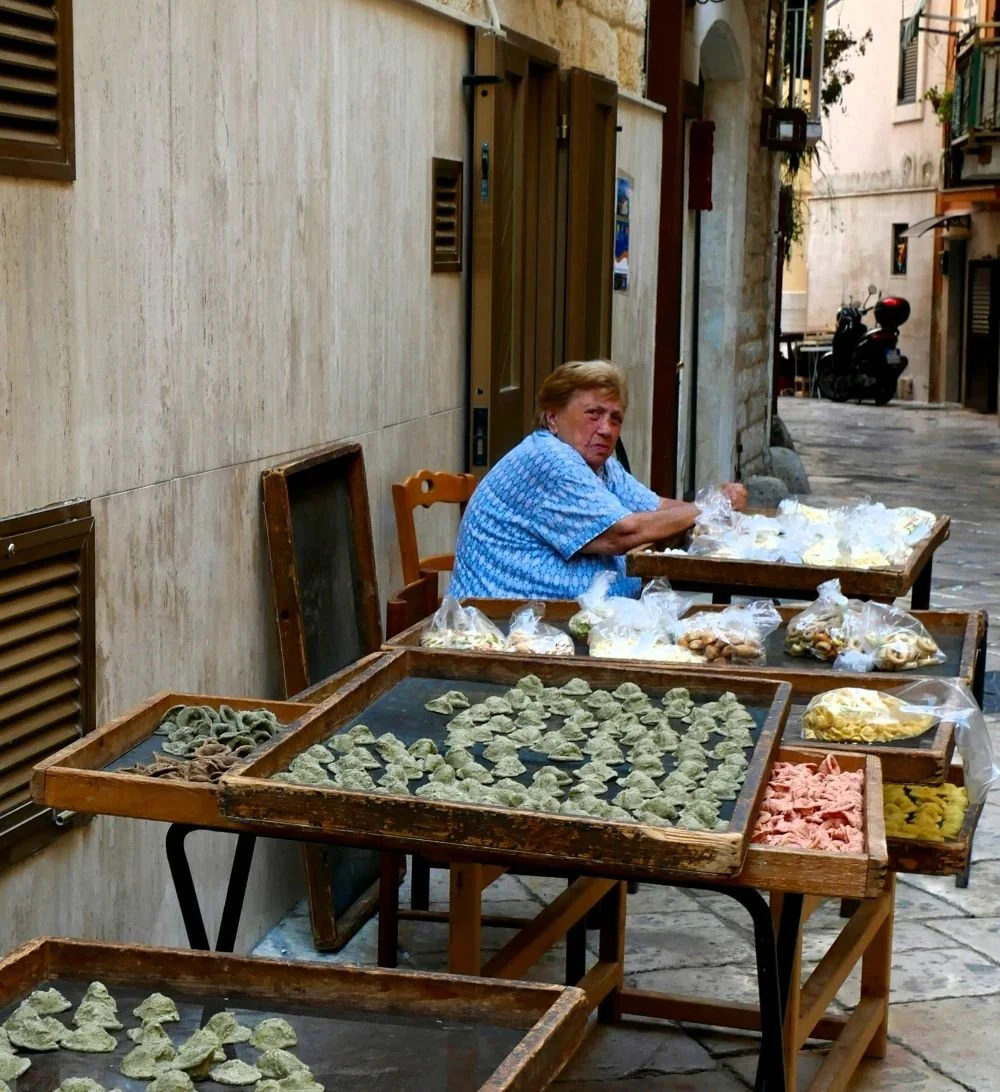
Travel south to Puglia, and the tradition moves from the kitchen into the street. In Bari Vecchia, the city's atmospheric old town, a narrow passage called Strada Arco Basso has become famous as Via delle Orecchiette—the street of little ears.
Here, women sit outside their homes making the small, cup-shaped pasta that is the pride of Puglia. Their hands move with remarkable speed: a piece of dough, a flick of the knife, a twist of the thumb, and another perfectly shaped orecchietta joins the hundreds already drying on wooden tables. Neighbors stop to chat, visitors watch in fascination, and a tradition passed from mothers to daughters continues in full view of the neighborhood.
Unlike Bologna's rich egg pasta, orecchiette traditionally requires just two ingredients: durum-wheat semolina and water. The technique, however, takes years to master. For generations, knowing how to make something nourishing from such humble ingredients has been an important part of family life.
Today, travelers can explore Bari's old town, meet local pasta makers, and even learn to shape orecchiette themselves. But the real appeal is discovering a living tradition that connects neighbors and generations. Here, cooking isn't something hidden away in a professional kitchen. It's woven into the everyday rhythm of the street, where food, family, and community have always belonged together.
Palermo: A Place at Nonna Enza's Table
Just outside Palermo, near the seaside town of Mondello, a Sicilian grandmother named Enza has welcomed travelers into a home kitchen to share traditional recipes and cooking techniques. It's a chance to discover another side of Sicily, an island whose cuisine reflects centuries of Greek, Arab, Norman, and Spanish influences.
In one such experience, guests meet their host, Francesco, who accompanies them to the kitchen and helps translate the grandmother's instructions into English. Working together in a small group, they prepare traditional Sicilian dishes that might include handmade pasta, a local specialty, or a dessert. The setting is informal, with plenty of opportunities to ask questions, practice unfamiliar techniques, and learn about Sicilian food traditions.
After the cooking comes perhaps the best part: gathering around the table on an outdoor terrace, enjoying the food and sharing stories. One visitor who cooked with Enza described her warmth and patience, recalling a meal filled with conversation and laughter. The experience felt less like a conventional cooking class and more like being welcomed into a Sicilian family.
It's a lovely example of how food can bring people together across cultures. Cooking gives strangers something to share, even when they don't speak the same language. A demonstration, a smile, or the offer of another helping can communicate just as much as a conversation.
For travelers exploring Palermo, cooking with a local nonna near Mondello offers a memorable way to encounter Sicilian hospitality. And somewhere between preparing a meal and sitting down together, strangers can begin to feel a little more like friends.
Bringing Italy Home: The Wonderful World of Pasta Grannies
These encounters are part of a much larger story, one that British food writer Vicky Bennison has spent years documenting. Through her popular Pasta Grannies project, Bennison travels across Italy meeting grandmothers, filming them in their kitchens, and preserving recipes they've spent lifetimes perfecting.
Her wonderful cookbook, Pasta Grannies: Comfort Cooking, introduces readers to remarkable home cooks, including 91-year-old Pina in Liguria, who prepares chestnut gnocchi with walnut pesto using ingredients grown around her home, and 99-year-old Marietta in Calabria, whose tagliatelle reflects the seasons and the bounty of her vegetable garden.
With 60 traditional recipes, beautiful photography, and QR codes linking to videos of the women preparing their dishes, the book is as much a collection of personal stories as it is a cookbook. Each recipe offers a glimpse into the regional traditions and everyday lives that make Italian cooking so special.
The Souvenir That Lasts
Perhaps one of the most meaningful things you can bring home from Italy is a recipe with a story attached. The handmade pasta you learned to roll in Bologna, the little ears of dough you shaped in Bari, or the Sicilian meal you prepared alongside a welcoming grandmother. Years later, making that dish in your own kitchen might bring back memories of the people you met and the places you discovered. And that's a pretty wonderful souvenir.
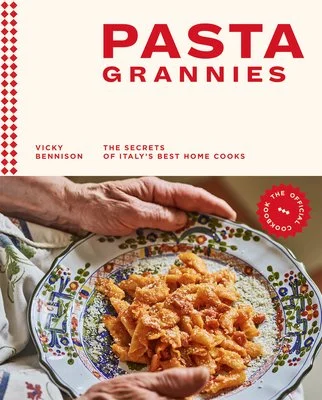
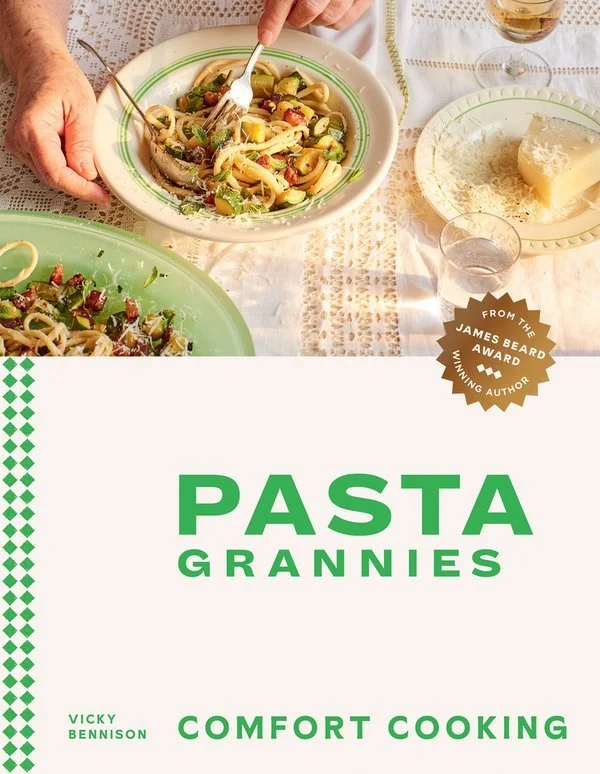
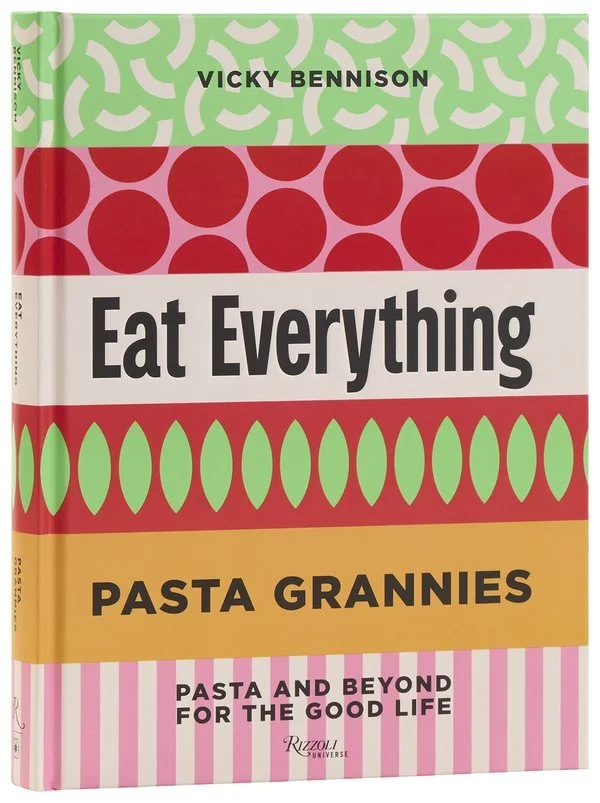
The three cookbook covers above link to Bookshop.org, where your purchase helps support independent bookstores. Explore more flavors from around the world in our collection of favorite travel cookbooks, filled with recipes, traditions, and stories that bring distant places a little closer to home.