
Discover New Orleans Through Books
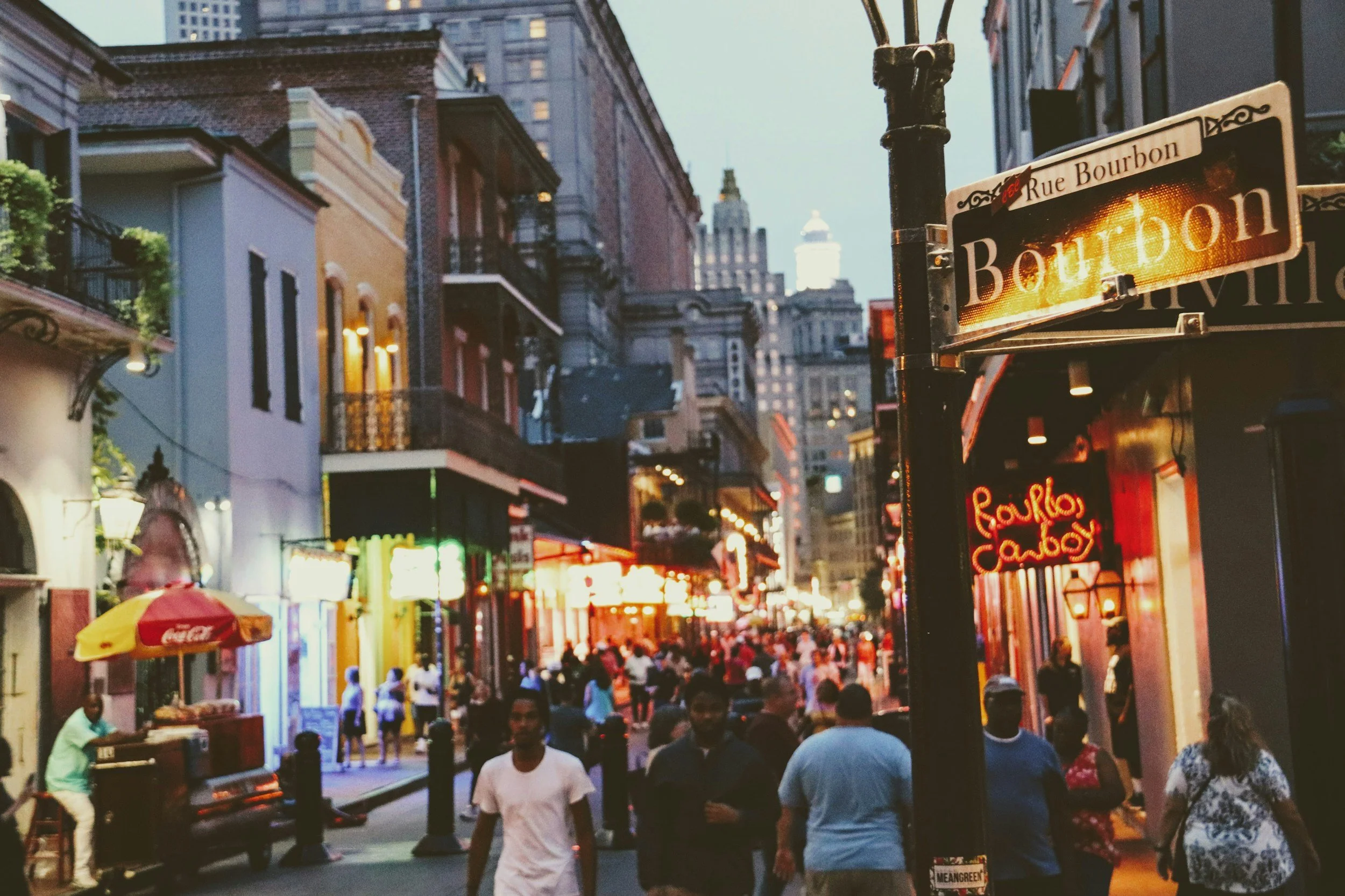
New Orleans reveals itself through sound, flavor, architecture, and ritual: a trumpet drifting from an open doorway, a bowl of gumbo shaped by generations of influence, iron balconies above the French Quarter, or a second line moving through a neighborhood street. French and Spanish rule, African traditions, Caribbean connections, Creole culture, immigration, and the Mississippi River have all left their mark on a city where history remains part of everyday life.
New Orleans can be exuberant and haunted, elegant and unruly, deeply traditional and endlessly inventive. Beyond Bourbon Street are residential neighborhoods, old restaurants, music clubs, bookstores, cemeteries, and gathering places that tell a much fuller story. The right books can help readers understand the writers, musicians, cooks, communities, and contradictions that have made New Orleans one of the world’s most original cities.
Travel Writing & Fiction
Unfathomable City: A New Orleans Atlas, by Rebecca Solnit and Rebecca Snedeker
Unfathomable City: A New Orleans Atlas is no ordinary collection of streets and landmarks. Created by Rebecca Solnit and filmmaker Rebecca Snedeker, the book pairs 22 imaginative, full-color maps with essays that reveal the histories, communities, and contradictions layered across New Orleans. One map traces the city’s corridors of live oak trees alongside its Carnival parade routes; another follows the African and Caribbean rhythms that helped shape jazz, brass bands, and Mardi Gras Indian traditions. Readers encounter the routes taken by social aid and pleasure clubs during their Sunday second lines, the neighborhoods that gave rise to New Orleans bounce music, and the deep bass sounds associated with musicians such as George Porter Jr. Other maps connect the city’s appetite for seafood with its long history of vice, follow the banana trade through New Orleans as a gateway to the tropics, and examine the city’s overlooked Arab presence. The book also confronts the forces that have threatened New Orleans, including Hurricane Katrina, the BP oil spill, disappearing wetlands, incarceration, and the ways political decisions have shaped which neighborhoods were protected and which were left vulnerable. Beautifully designed but filled with serious history, Unfathomable City encourages readers to see New Orleans not as a single story or a set of famous attractions, but as a place where music, land, race, celebration, commerce, and survival continually overlap.
Why New Orleans Matters, by Tom Piazza
Written in the immediate aftermath of Hurricane Katrina, Why New Orleans Matters is Tom Piazza’s deeply personal argument for why the city was worth saving—not simply as a collection of historic buildings, but as a living culture found in music, food, ritual, and everyday public life. Piazza writes about hearing brass bands and drums appear unexpectedly in the streets, cars stopping for second lines and jazz funerals, the communal energy of Mardi Gras, and the particular experience of eating, drinking, and listening to music in a city where pleasure is treated as something essential rather than frivolous. He also confronts New Orleans’ poverty, racism, corruption, and longstanding neglect, refusing to romanticize the conditions that made Katrina so devastating. The result is part memoir, part cultural essay, and part defense of a place whose traditions cannot simply be rebuilt elsewhere if they disappear. Later editions include an afterword reflecting on the city’s recovery and on the continuing vulnerability of coastal communities, but the heart of the book remains Piazza’s conviction that New Orleans matters because it has created a rare way of living—one in which history, creativity, sorrow, celebration, and community remain inseparable.
Interview With The Vampire, by Anne Rice
Interview With The Vampire transforms New Orleans into a setting as seductive and unsettling as its immortal characters. Told as the confession of Louis de Pointe du Lac, the novel begins on a Louisiana plantation, where the charismatic and ruthless Lestat turns him into a vampire, before following their nocturnal life through the streets and elegant houses of New Orleans. Louis struggles with the violence required to survive, initially feeding on animals while Lestat embraces his appetites without remorse. Their uneasy relationship becomes still more complicated when they make Claudia a vampire, trapping a fiercely intelligent and increasingly independent woman forever in the body of a young girl. Together, the three inhabit an opulent French Quarter home filled with chandeliers, statues, servants, and a hidden courtyard, while unsuspecting victims pass through the lively city beyond its doors. Rice draws on New Orleans’ decaying grandeur, Catholic imagery, shadowed streets, elaborate cemeteries, and proximity to death to create a version of the city that feels both historically grounded and dreamlike. First published in 1976, the novel introduced Rice’s Vampire Chronicles and helped establish New Orleans as one of the defining landscapes of modern gothic fiction.
Guides for the Journey
DK Top 10 New Orleans
Compact, colorful, and easy to navigate, DK Top 10 New Orleans is a practical companion for travelers who want help making the most of a limited amount of time in the city. The guide organizes its recommendations into useful lists covering New Orleans’ essential sights, historic buildings, music venues, restaurants, bars, festivals, museums, and family-friendly experiences, while detailed neighborhood sections help readers explore the French Quarter, the Garden District, the Warehouse District, Marigny, and other parts of the city. Suggested itineraries make it easier to plan anything from a quick weekend to a longer visit, and the book’s photographs, illustrations, maps, and concise cultural background provide context without overwhelming the reader. Its pocket-sized format also makes it particularly useful while walking through the city, whether the day includes admiring the architecture of Jackson Square, riding the St. Charles streetcar, listening to live music on Frenchmen Street, or venturing beyond the best-known attractions. Click here to learn more about DK Eyewitness Travel and to discover more of its beautifully designed travel guides.
111 Places in New Orleans That You Must Not Miss
111 Places in New Orleans by local author and photographer Sally Asher is designed for travelers who want to discover the city’s stranger, more surprising corners. Rather than concentrating on the French Quarter’s most famous landmarks, the book leads readers to places such as a chapel decorated with discarded prosthetic limbs, the oldest African American Catholic church in the country, and a bridge associated with Voodoo ceremonies. Its food discoveries are equally distinctive, ranging from praline bacon and pork belly po’boys to a Bananas Foster sno-ball, while other entries explore early jazz history, unusual museums, atmospheric dive bars, haunted landmarks, and eccentric local treasures such as a chartreuse beehive wig and a hand-painted sign warning visitors to “Be Nice or Leave.” Each location is presented with photography, practical details, and a short story explaining what makes it worth seeking out. Completely revised for 2026 with more than 70 new entries, the book offers a playful alternative to a conventional guidebook and captures the musical, spiritual, edible, mysterious, and wonderfully unconventional sides of New Orleans.
Food, Art & Culture
Satchmo: My Life in New Orleans, by Louis Armstrong
In Satchmo: My Life in New Orleans, Louis Armstrong looks back on the city that shaped him long before he became one of the most influential musicians in jazz history. Armstrong recalls growing up in a poor neighborhood near the rough entertainment district of Storyville, earning money by delivering coal, selling newspapers, and singing on street corners with other boys. He writes about the music that surrounded him in daily life: brass bands marching through the streets, pianists playing in honky-tonks, church singing, funeral processions, riverboats, and the cornet players whose sound first captured his imagination. After firing a pistol into the air on New Year’s Eve, Armstrong was sent to the Colored Waifs’ Home, where he learned discipline, joined the band, and began developing seriously as a musician. He later describes performing in neighborhood venues, learning from the celebrated cornetist Joe “King” Oliver, and playing aboard Mississippi River excursion boats before leaving for Chicago in 1922. Written in Armstrong’s warm, humorous, and unmistakably personal voice, the memoir captures both the hardships of his childhood and the extraordinary musical culture that allowed his talent to emerge. More than the story of a famous musician, it is a firsthand portrait of New Orleans at the moment when jazz was beginning to take form.
Gumbo Tales, by Sara Roahen
Gumbo Tales: Finding My Place at the New Orleans Table is Sara Roahen’s lively exploration of New Orleans through the foods that helped her understand her adopted city. A Wisconsin native and former restaurant critic, Roahen moves beyond famous restaurants to examine the traditions, communities, and personal histories surrounding dishes such as gumbo, po’boys, red beans and rice, crawfish, oysters, king cake, sno-balls, and coffee with chicory. She considers the fierce local debates over what belongs in a gumbo, learns why red beans remain closely associated with Mondays, drinks Sazeracs alongside raw oysters, and explores the improbable construction of the turducken. The book also reaches beyond the city’s best-known Creole and Cajun dishes, introducing the Vietnamese community of New Orleans East through bowls of pho, the Sicilian influence behind red gravy and braciolone, and the street-food traditions surrounding ya-ka-mein. Organized as a series of essays rather than a conventional restaurant guide or cookbook, Gumbo Tales shows how food can reveal migration, family history, neighborhood identity, celebration, and belonging. Roahen’s account also spans Hurricane Katrina, capturing both the disruption caused by the storm and the role that restaurants, recipes, and shared meals played in helping New Orleans preserve its culture and rebuild its sense of community.

Travel to the Travelreads American South Bookshelf to discover more books and stories exploring the region’s history, food, culture, landscapes, and distinctive sense of place

Buy Books. Support Local Bookstores.
Ready to plan your next travel adventure? Travelreads is proud to partner with Bookshop.org, where many of our recommendations are available while helping support independent bookstores. Every purchase supports local booksellers and the communities they serve.

New Orleans has inspired generations of writers because the city already seems to contain the elements of a novel: unforgettable characters, dramatic settings, competing histories, and stories unfolding on every street. Through the work of Tennessee Williams, John Kennedy Toole, Anne Rice, Sarah M. Broom, and others, this literary journey reveals how books can deepen the experience of visiting one of America’s most distinctive cities.